
Fire Safety Compliance for Residential Towers: A 2026 Guide for UAE Communities
- Sohrab Virani

- Jun 30
- 11 min read
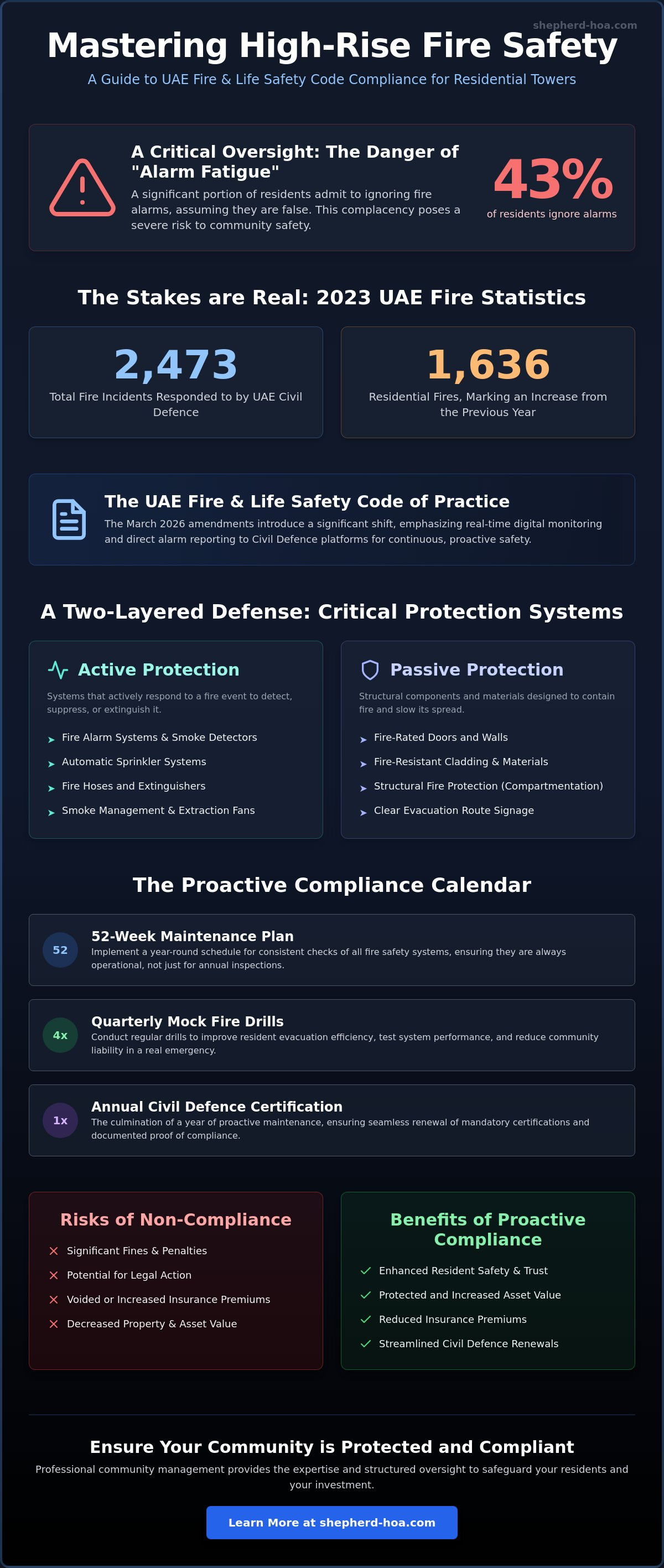
Did you know that nearly 43% of residents admit to ignoring fire alarms because they assume they're just another routine check or false alarm? This staggering statistic highlights a critical gap in community safety that places immense pressure on those responsible for building governance. Achieving consistent fire safety compliance for residential towers is no longer just a matter of passing an annual inspection; it's a continuous duty of guardianship. You're likely feeling the weight of potential liability and the confusion of evolving cladding regulations, all while trying to manage various maintenance contractors.
We understand that keeping up with the March 2026 amendments to the UAE Fire and Life Safety Code of Practice can feel like a full-time job on top of your existing professional duties. This guide provides a clear roadmap to help you master high-rise safety regulations so you can protect your residents and preserve your community asset value. We'll break down the latest legal requirements, show you how to reduce insurance premiums through better safety ratings, and help you establish a system of organized control that brings total peace of mind to your entire community.
Table of Contents
The Stakes of Fire Safety Compliance for Residential Towers
Fire safety compliance for residential towers represents much more than a routine administrative hurdle. It is the rigorous adherence to the UAE Fire and Life Safety Code of Practice and the continuous maintenance of systems designed to preserve life. In the context of high-rise living, compliance acts as a shield for both people and property. Understanding The Stakes of Fire Safety Compliance is essential for every board member, as residential towers face unique risks that low-rise villas do not. Vertical fire spread, complex smoke management, and the logistical challenges of evacuating hundreds of residents simultaneously require a sophisticated, integrated approach to safety.
The statistics underscore the urgency of this mission. In 2023, UAE Civil Defence teams responded to 2,473 fire incidents, with residential fires increasing to 1,636 cases compared to the previous year. For high-rise communities, the Owners Association serves as the legal guardian of these complex systems. This guardianship isn't just about safety; it is a direct driver of property value. Buildings with impeccable safety ratings and up-to-date Civil Defence certifications naturally attract higher-quality tenants and command better resale prices. Investors recognize that a well-maintained building is a lower-risk asset with more predictable long-term appreciation.
Legal Liability and the Duty of Care
Within a managed community, the "Responsible Person" concept is central to legal accountability. This individual or entity must ensure that fire safety systems are functional at all times, not just during an annual inspection. Failing to meet fire safety compliance for residential towers can lead to severe consequences, including significant fines, potential legal action, and the voiding of insurance policies. If an incident occurs and maintenance records are found to be incomplete, the financial fallout for the community can be catastrophic. In 2026, the duty of care for HOA boards is defined as the proactive, documented oversight of all life-safety infrastructure to ensure permanent operational readiness.
The Emotional Impact on Resident Harmony
Safety is the foundation of social stability within a building. When residents see visible safety measures, such as well-maintained fire doors and clear signage, it builds a sense of trust in the management. You can significantly reduce resident anxiety by providing transparent communication regarding safety protocols and recent system upgrades. This transparency is a vital component of living in a UAE community, where harmony is maintained through organized control and mutual respect for collective well-being. By positioning fire safety as a shared priority, you transform a technical requirement into a cornerstone of community pride and peace of mind.
Understanding the UAE National Fire Safety Regulatory Framework
The regulatory landscape in the UAE is precise and demanding. At its heart lies the UAE Fire and Life Safety Code of Practice. While the 2018 edition remains the foundation, the 54 amendments released on March 12, 2026, introduced significant shifts toward international alignment. These updates focus on flexibility and smart integration. For those managing high-rise assets, fire safety compliance for residential towers now involves real-time digital monitoring and direct alarm reporting to Civil Defence platforms. This proactive model ensures that systems don't just work during an audit; they work every second of every day.
This national framework doesn't exist in a vacuum. It interacts directly with the governance standards set by RERA Dubai. While Civil Defence oversees the technical certification, RERA ensures that the financial and administrative structures are in place to fund these critical systems. Many of the technical benchmarks used by local authorities are derived from global standards, such as those found in Critical Systems: Beyond the Basics by the NFPA. Balancing these regional and international requirements is a key responsibility for any community board.
Mandatory Certification and Documentation
Achieving and maintaining a valid Civil Defence (DCD) certificate is an annual requirement. This document serves as the ultimate proof that your building meets national safety standards. Beyond the certificate itself, you must maintain a detailed Fire Safety Logbook. This record should document every test, inspection, and repair performed on your systems. You also need to keep stamped, approved floor plans readily available in the building’s fire command center. These documents are the first thing authorities will request during an unannounced audit.
The Role of Third-Party Inspections
Independent audits are a legal necessity for high-rise compliance. These inspections provide an unbiased view of your building’s safety health. It's vital to select only Civil Defence-approved contractors for maintenance and testing. This level of oversight is a core component of professional owners association management. Expert managers act as the backbone of this process, ensuring that all third-party reports are accurate and that any identified faults are rectified immediately. If you're feeling overwhelmed by the complexity of these audits, partnering with an experienced community management firm can provide the organized control you need.
Critical Systems: Beyond the Basics of Fire Protection
Effective fire safety compliance for residential towers relies on a dual-strategy: active and passive protection. Active systems, such as sprinklers and alarms, work to detect and extinguish a fire. Passive systems, like fire-rated walls and floors, work to contain the fire within a specific area. In a high-rise environment, these systems must function in perfect synchronization. Without robust passive containment, active systems can be overwhelmed by the rapid vertical spread of smoke and heat through elevator shafts and stairwells.
Automated fire alarm systems and voice evacuation are the primary lines of defense for resident safety. In the UAE, a voice evacuation system is mandatory for any building taller than 23 meters. These systems provide clear, calm instructions that prevent panic during an emergency. For first responders, firefighting lifts and wet or dry risers are essential tools. These specialized lifts allow Civil Defence teams to reach upper floors quickly, while risers ensure a steady water supply is available at every level. Ensuring these access points remain unobstructed and fully functional is a non-negotiable part of your guardianship role.
Visibility is equally vital when power fails. Emergency exit lighting and clear wayfinding signage guide residents toward safety through smoke-filled corridors. These systems require regular battery testing and bulb replacement to ensure they're ready when they're needed most. A well-lit escape route is often the difference between a successful evacuation and a tragic incident.
Cladding and External Wall Systems
Non-compliant cladding remains a significant risk for older towers across the region. Modern national standards require cladding remediation for buildings that use combustible materials, ensuring the exterior facade doesn't act as a fuel source. Ensuring cladding integrity is a pillar of high-rise safety compliance that prevents fire from leaping between floors externally. Boards must prioritize the inspection of facade panels to identify any materials that don't meet current non-combustibility requirements.
Fire Doors and Compartmentation
Compartmentation is the science of containing smoke and flames within a single apartment or zone. The most common point of failure in this system is the self-closing mechanism on apartment entry doors. If a door doesn't close fully, the compartment is breached, allowing smoke to flood common hallways. Fire doors for stairwells must maintain a minimum fire rating of 1.5 hours and be equipped with intact smoke seals. Regular testing protocols should include checking every door's closing speed and ensuring that no resident has propped open a fire door for convenience.
Implementing a Proactive Compliance and Maintenance Schedule
Maintaining fire safety compliance for residential towers isn't a seasonal task; it's a 365-day commitment to guardianship. To move from reactive fixes to proactive protection, you must establish a 52-week maintenance calendar. This schedule ensures that every sensor, pump, and alarm is tested according to its specific technical requirements. A structured approach prevents the operational stress that often precedes an annual Civil Defence audit. It also ensures that systems like the Hassantuk alarm interface, which became mandatory for many structures by early 2024, remain perfectly synchronized with national emergency response centers.
Consistency is the backbone of a safe community. Beyond technical checks, you should conduct quarterly mock fire drills to test evacuation efficiency. These drills reveal practical bottlenecks that paperwork cannot, such as blocked stairwells or malfunctioning voice evacuation speakers. Training your building staff is equally critical. Every security guard and facility technician must know how to handle system overrides and guide emergency responders. Using digital platforms for reporting creates a transparent audit trail, allowing you to prove compliance at a moment's notice while providing the board with organized control over maintenance history.
Budgeting for Safety and the Reserve Fund
Financial health is the fuel for physical safety. You must ensure that the community service charge budget accounts for both routine inspections and long-term system health. While service charges cover monthly testing, the reserve fund is your safety net for major capital expenditures. This includes significant projects like cladding remediation or total sprinkler system overhauls. Managing these funds through the Mollak system ensures that every dirham allocated for safety is tracked and approved, maintaining the integrity of your community's financial guardianship.
Resident Education and Engagement
A well-equipped building is only safe if the people inside know how to react. Distributing updated fire safety handbooks to all unit owners and tenants is a vital step in reducing community anxiety. You must clearly communicate whether your tower follows a "Stay Put" or "Total Evacuation" strategy, as this varies based on building height and compartmentation design. Addressing common violations, such as residents propping open fire doors or storing items in escape corridors, is essential for social harmony. When residents understand that these rules protect their investment and their lives, compliance becomes a shared community value. If you need assistance building a robust safety roadmap for your property, our team provides expert community management services to guide your board through every regulatory requirement.
How Professional Community Management Ensures Continuous Compliance
Maintaining fire safety compliance for residential towers is a complex, multi-layered responsibility that requires a dedicated backbone of administrative and operational oversight. Professional community management acts as the watchful guardian of these interests, ensuring that no technical detail or legal deadline is overlooked. At Shepherd HomeOwners' Association, our approach is built on the principle of guardianship. We replace the frantic energy of last-minute renewals with a methodical system of organized control. This ensures that your building remains a safe, compliant, and high-value asset without placing an undue burden on the volunteer board members who govern it.
Streamlining the Civil Defence renewal process is one of the most critical functions we perform. By maintaining a continuous dialogue with authorities and coordinating all required inspections well in advance, we prevent gaps in certification that could void insurance or trigger fines. Our role also extends to ethical tendering for maintenance contracts. We ensure that every dirham spent on safety is directed toward quality and value, avoiding the pitfalls of low-cost, low-quality providers. Through real-time compliance monitoring and proactive reporting, we provide the board with a clear, honest picture of the building's safety health at every meeting.
Expert Oversight of Maintenance Contractors
Managing third-party contractors is often the most significant pain point for community boards. We take this weight off your shoulders by strictly vetting every vendor for Civil Defence approval and technical competence. Our team manages the daily performance of on-site facility management staff, ensuring that routine checks aren't just checked off on a list but are performed to the highest standard. When remedial works are necessary, we ensure they are documented and certified immediately, maintaining the integrity of your building’s safety logbook and ensuring fire safety compliance for residential towers remains unbroken.
Mitigating Risk for HOA Board Members
Volunteer board members often feel a deep sense of anxiety regarding their personal liability in the event of an incident. Professional management effectively transfers the operational risk away from these volunteers by placing the responsibility for execution and oversight in expert hands. We provide you with clear, actionable data that simplifies the decision-making process. This transparency ensures that you can fulfill your duty of care with total peace of mind, knowing that your community's assets are protected by a steady, expert guide. To secure your building's future, protect your community and ensure compliance with Shepherd HomeOwners' Association.
Securing Your Community Through Proactive Guardianship
Mastering the March 2026 amendments and establishing a rigorous 52-week maintenance calendar are the first steps toward total peace of mind. By prioritizing cladding integrity and expert oversight of life-safety systems, you protect both the lives of your residents and the long-term value of your property assets. Maintaining fire safety compliance for residential towers is a continuous journey that demands precision, transparency, and a dedicated duty of care. It's about moving beyond the annual certificate and building a culture of safety that residents can trust every single day.
As a RERA-approved community management partner with specialized high-rise facility oversight and deep expertise in Mollak financial reporting, we act as the steady guide for your board. We handle the technical complexities and administrative burdens so you can focus on leading your community with confidence. Secure your community’s future with Shepherd HOA’s compliance expertise today. You don't have to manage these heavy responsibilities alone. With the right professional partner, you can transform operational stress into a lasting legacy of safety and social harmony for everyone in your tower.
Frequently Asked Questions
Who is legally responsible for fire safety in a UAE residential tower?
The building owner or the authorized facility manager serves as the "Responsible Person" under UAE law. For managed communities, the Owners Association Board acts as the collective guardian of the property's safety infrastructure. They're legally required to ensure that all fire protection systems remain operational 24/7. Failing to fulfill this duty can lead to legal action and significant financial penalties for the entire community.
How often must fire safety systems be inspected in a high-rise building?
Annual Civil Defence certification is the legal baseline, but true fire safety compliance for residential towers requires a much more frequent schedule. Most active systems, like fire pumps and alarm panels, need monthly or quarterly inspections by Civil Defence-approved contractors. Following a structured 52-week maintenance calendar ensures that minor faults are repaired before they compromise the building's safety or lead to a failed audit.
What is the UAE Fire and Life Safety Code of Practice?
It's the primary national regulation governing building safety throughout the Emirates. The current operative version is the 2018 Edition, which was significantly updated with 54 amendments on March 12, 2026. These updates align UAE standards with international benchmarks like the NFPA. The code provides the strict technical requirements for everything from smoke barriers to the installation of automated sprinkler systems.
Can an HOA board be fined for fire safety non-compliance?
Yes, HOA boards face significant legal and financial risks for failing to meet national safety standards. Civil Defence authorities maintain a zero-tolerance policy for expired certificates or blocked escape routes. Beyond government fines, non-compliance can cause your building insurance to become void. This leaves the board and owners personally liable for damages in the event of an incident, emphasizing the need for professional guardianship.
What should residents do if they suspect a fire door is faulty?
Residents should report any suspected faults, such as propped-open doors or broken self-closing mechanisms, to the community manager immediately. Fire doors are critical for compartmentation, which contains smoke and flames within a single unit to allow safe evacuation. A door that doesn't close fully isn't just a nuisance; it's a breach in the building's primary defense system that puts all residents at risk.
How does the Mollak system help with fire safety maintenance?
The Mollak system provides the financial framework required for consistent safety. By centralizing service charge collections and budget approvals, Mollak ensures that funds are transparently allocated for technical maintenance and Civil Defence renewals. It allows the board to prove to regulators and residents that the building's safety systems are fully funded and that all maintenance contracts are being executed legally.
What are the requirements for fire safety signage in high-rise buildings?
Signage must be photoluminescent and placed at specific intervals to guide residents during a power failure. This includes "Exit" signs, floor number indicators in stairwells, and instructions for manual call points. All signage must meet the technical specifications outlined in the UAE Fire and Life Safety Code of Practice to ensure it remains visible through thick smoke, providing a clear path to safety.
Do we need to replace the cladding on our building to be compliant?
Remediation is required if your building's facade consists of combustible materials that don't meet modern non-combustibility standards. High-rise fires often spread vertically through external panels, making cladding a high-priority area for fire safety compliance for residential towers. If a professional audit identifies non-compliant cladding, the board must use the reserve fund to plan for remediation to protect the asset's value.


Comments