
Gym and Facility Management in Communities: The 2026 Guide to Asset Preservation
- Sohrab Virani

- Jul 1
- 11 min read
What if the very amenities designed to attract residents are actually the biggest hidden drain on your community's reserve fund? Most board members and owners' association representatives view shared spaces as a simple lifestyle perk, but without expert oversight, these assets can quickly become liabilities. You likely feel the mounting pressure of rising maintenance costs and the constant frustration of equipment downtime. It's exhausting to manage resident complaints about broken treadmills while worrying about the legal risks of a common area accident.
Effective gym and facility management in communities transforms these challenges into a streamlined system of protection and growth. This 2026 guide reveals how professional oversight protects property values and enhances resident harmony across the UAE. We'll show you how to achieve full compliance with national regulatory standards, including Dubai Sports Council requirements, while reducing operational stress. You'll discover practical steps to improve vendor transparency and implement maintenance schedules that turn your shared facilities into lasting community assets.
Table of Contents
The Strategic Role of Gym and Facility Management in Modern Communities
In 2026, the standard for communal living in the UAE has reached a new level of sophistication. Residents no longer view a gym or a swimming pool as a simple luxury; they see these spaces as essential extensions of their homes. This shift means that gym and facility management in communities is no longer just a janitorial or maintenance task. It's a strategic form of guardianship. When shared spaces are managed with precision, they become the primary driver of resident retention and property desirability. Conversely, a poorly maintained gym quickly becomes a source of frustration that can spark a cycle of community dissatisfaction.
Adopting a professional approach to facility management ensures that your community's most valuable shared assets are preserved for the long term. Moving away from reactive repairs toward a proactive model allows boards to identify issues before they escalate into costly capital expenditures. This organized control replaces operational stress with a sense of peace of mind for both the owners' committee and the residents they serve.
Enhancing Resident Quality of Life
A well-managed gym serves as a social hub that fosters harmony among neighbors. Friction often arises in communal spaces when equipment is frequently out of order or when usage rules are unclear. Professional management prevents these disputes by ensuring all assets are functional and that facility protocols are transparently enforced. This creates a predictable environment where residents feel their service charges are being utilized effectively. When people see that their amenities are cared for, it builds a sense of pride and collective responsibility within the building.
Protecting Property Valuations
Your community's amenities often provide the "first impression" for potential buyers and tenants. A gym with rusted weights or a pool with chipped tiles signals a lack of oversight, which can lead to "community decay" and falling property prices. Professional oversight protects your investment by maintaining a high standard of presentation and functionality. This level of care directly correlates with long-term asset value preservation. By securing the condition of these spaces, you ensure the long-term financial stability of the homeowners' association, making the property a more attractive prospect in a competitive market.
Predictable Budgeting: Professional oversight helps in planning for future equipment replacements.
Reduced Liability: Constant monitoring ensures all safety protocols are met, protecting the board from legal risks.
Resident Satisfaction: High-quality amenities lead to longer lease renewals and higher owner-occupancy rates.
Core Pillars of Professional Amenity Oversight in the UAE
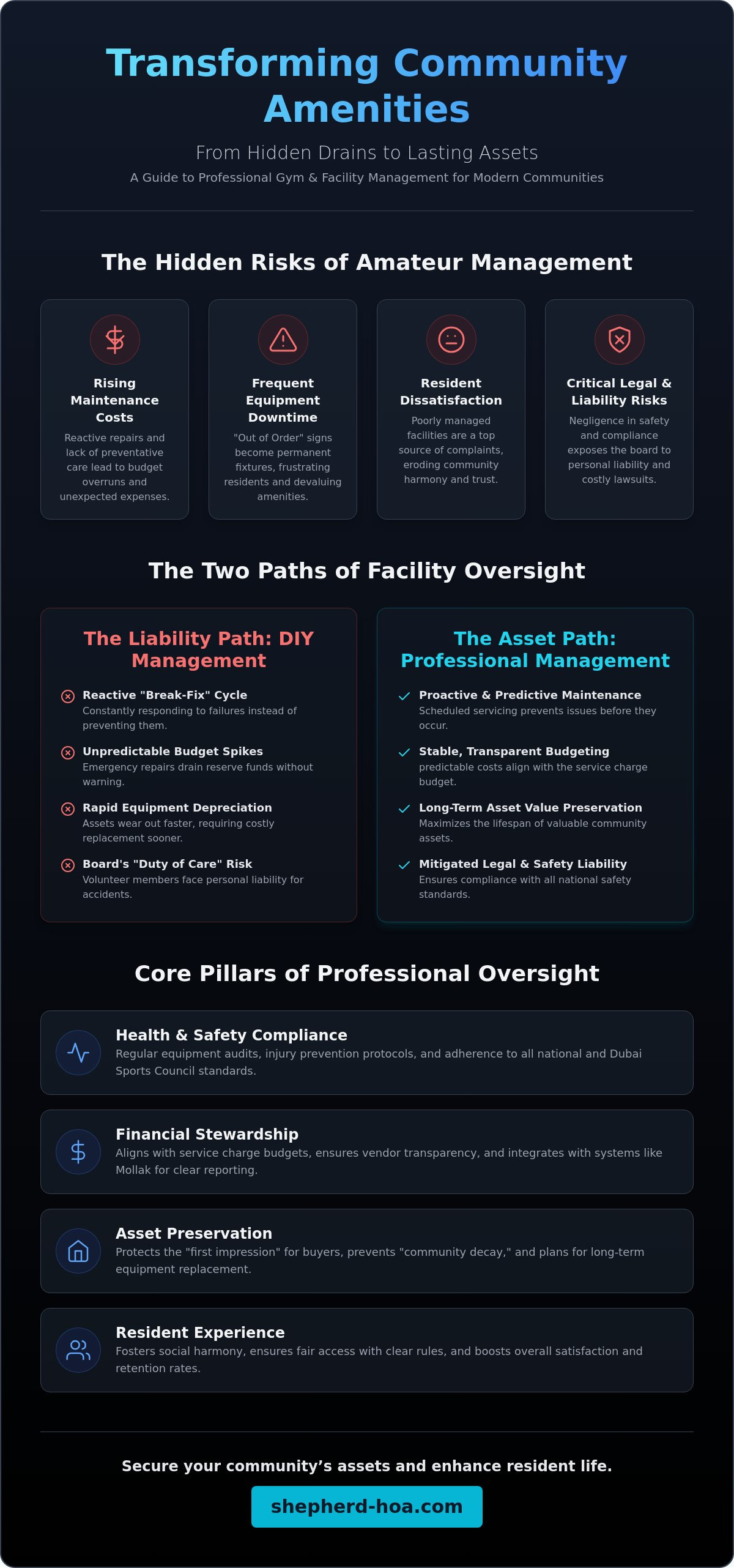
Professional oversight in a residential context is far more than a simple cleaning schedule. It's the comprehensive management of shared communal spaces to ensure every dirham spent contributes to safety, functionality, and regulatory compliance. In the UAE, where luxury amenities are the standard, gym and facility management in communities acts as a protective shield for the owners' association. It moves the focus from "fixing what's broken" to maintaining a high-performance environment that residents can rely on daily.
A structured approach to oversight begins with rigorous safety and compliance protocols. This involves adhering to national fire, life, and health safety standards to protect the community from both physical accidents and legal liabilities. By implementing professional Budget Planning and vendor management, boards can ensure that third-party contractors deliver genuine value. This level of financial transparency is essential for aligning facility costs with national reporting systems and maintaining the integrity of the service charge fund.
Health and Safety Compliance
Safety is the non-negotiable foundation of any communal facility. Regular safety audits for gym equipment are vital to prevent injuries that could expose the board to significant liability. These audits check for structural integrity, cable wear, and electrical safety. Beyond the equipment, facilities must meet national accessibility and inclusivity standards to ensure all residents, including people of determination, can use the spaces safely. Managing air quality and hygiene protocols in high-traffic areas is also a critical component of modern guardianship, especially in climate-controlled environments where ventilation systems must be kept at peak efficiency.
Asset Lifecycle Management
Asset lifecycle management in UAE community facilities is the strategic process of tracking an asset from procurement through maintenance to final replacement to maximize its utility and minimize long-term costs. This pillar requires creating a detailed inventory of every asset within the facility, from the heavy-duty treadmills to the HVAC units. By tracking the age and condition of these items, management teams can accurately budget for capital expenditure (CAPEX). This proactive planning prevents the "sticker shock" of sudden equipment failure and ensures the community has the funds ready for future replacements without needing emergency levies.
Preventive Maintenance: Scheduled inspections that extend the functional life of expensive fitness machinery.
Vendor Oversight: Rigorous contract management to ensure service level agreements (SLAs) are consistently met.
Financial Integrity: Clear reporting that links facility spending directly to the community's long-term financial health.
Professional Management vs. DIY: Mitigating Risk and Liability
Many volunteer board members assume that a "do-it-yourself" approach to shared amenities saves the community money. In reality, this path often exposes committee members to a dangerous "Duty of Care" dilemma. Without the support of professional gym and facility management in communities, you're personally responsible for ensuring every piece of equipment meets safety standards. If an accident occurs, the lack of professional oversight can lead to severe legal consequences and personal exposure. It's a heavy burden for a volunteer to carry alone.
The hidden costs of amateur management extend far beyond legal risks. When maintenance is reactive rather than proactive, equipment depreciates at an accelerated rate. A single major cable snap on a multi-gym or a pump failure in a communal pool can cost more in emergency repairs than an entire year of professional management fees. Engaging with expert owners association management dubai provides a protective shield. This partnership shifts the burden of operational oversight from volunteers to qualified professionals who understand the stakes.
Understanding Legal Liability
Navigating the complex insurance requirements for communal gyms and pools requires specialized knowledge. Professional managers ensure that your public liability and professional indemnity insurance is fully compliant with the scope of your facilities. In Dubai, for example, annual insurance costs for gyms can range between AED 10,000 and AED 50,000. Professionals maintain meticulous, time-stamped inspection logs. These documents are your primary defense against liability claims, proving that the board has fulfilled its duty of care. This rigorous documentation ensures your community stays aligned with rera dubai guidelines for the maintenance of common areas.
The Hidden ROI of Expertise
Expert management pays for itself through increased efficiency and negotiating power. Management firms often secure significantly better rates for equipment servicing and cleaning contracts because of their existing vendor relationships. They also look at the bigger picture, such as energy efficiency. Simple adjustments to facility lighting and HVAC schedules can noticeably reduce community utility bills. Beyond the finances, professional managers act as neutral mediators. When residents clash over facility usage or noise, an authoritative third party can resolve the dispute quickly. This preserves social harmony without the board getting caught in the middle of neighborhood friction.
Mitigated Risk: Professional logs provide a legal paper trail of safety.
Cost Savings: Bulk negotiating power reduces vendor contract prices.
Conflict Resolution: Professional mediation prevents personal disputes between neighbors.
Modernizing Community Facilities: Technology and Sustainability in 2026
The definition of a community gym has evolved significantly. In 2026, residents expect more than a room full of treadmills; they look for integrated wellness suites that offer recovery tools like infrared saunas and cold plunges. This shift requires a sophisticated approach to gym and facility management in communities. Technology now serves as the invisible backbone of these spaces, ensuring that high-tech amenities remain functional and secure without increasing the administrative burden on the board.
Smart access control systems allow residents to manage their facility usage via mobile applications, which provides a seamless user experience while enhancing security. For owners' committees, the real value lies in the data these systems generate. Integrating this usage data into mollak dubai ensures that every dirham allocated to facility maintenance is backed by transparent reporting. This level of oversight builds trust among homeowners, as they can clearly see the correlation between their service charges and the actual utilization of shared assets.
Data-Driven Management
Modern facility oversight relies on usage statistics to optimize operational efficiency. By analyzing when the gym is most active, management teams can schedule cleaning and maintenance during off-peak hours to minimize resident disruption. Predictive maintenance represents the next frontier. IoT sensors now detect early signs of equipment wear, such as motor strain in a treadmill or a drop in pool filtration pressure, before a total failure occurs. With the smart fitness sector projected to grow at a compound annual growth rate of 12.3% between 2026 and 2035, communities that invest in these tools today are better positioned for future stability. Community portals now offer real-time status updates, giving owners organized control over their daily routines.
Sustainability and Cost Reduction
Sustainable upgrades are no longer just about corporate social responsibility; they're about financial survival. Retrofitting gyms with energy-generating cardio equipment and smart lighting systems significantly reduces the community's carbon footprint. Water conservation strategies in changing rooms and pools, such as high-efficiency filtration and low-flow fixtures, are essential for long-term cost control in the UAE's climate. Implementing sustainable facility management practices directly lowers service charges by reducing the long-term utility and maintenance expenses born by the community fund.
If your community is ready to transition from reactive maintenance to a technologically advanced guardianship model, our expert team can assist with comprehensive Community Management solutions that protect your assets for the future.
Integrating Facility Management into Your Community Governance
Governance is the framework that ensures your community's physical standards match its financial planning. For an owners' committee, this means moving beyond simple oversight and into strategic leadership. Aligning your gym and facility management in communities with the community service charge budget dubai is a critical step for long-term stability. When facility goals are integrated into the budget from the start, you avoid the friction of unexpected levies and ensure that every maintenance contract is fully funded and transparently managed.
Transitioning from developer-led to owner-led facility management represents a significant milestone for any community. It's the moment when residents take full control of their lifestyle and investment. This transition requires the committee to set clear Key Performance Indicators (KPIs) for vendors, such as equipment uptime percentages and safety audit completion rates. By establishing these standards early, the board creates a culture of accountability that protects the community's assets and its social harmony.
Developing a Facility Roadmap
Success in facility oversight doesn't happen by accident. It requires a documented roadmap that balances immediate needs with future aspirations. We recommend setting specific 1-year and 5-year goals for amenity improvements. While the 1-year goal might focus on restoring equipment to peak condition, the 5-year plan could involve major upgrades like pool resurfacing or the installation of smart fitness technology. Conducting regular resident surveys is essential during this process. It ensures the facilities meet actual community needs rather than perceived ones. Finally, implementing an ethical tendering process for service contracts ensures the community receives maximum value and transparency for every dirham spent.
The Shepherd Advantage
Shepherd acts as the invisible backbone for community boards across the UAE. We understand that volunteer board members have personal stakes in their community's success but often lack the time to manage complex administrative requirements. Our approach to guardianship focuses on expert administrative compliance to remove the stress of RERA and Mollak management. We provide the organized control you need to ensure your community thrives, allowing you to focus on your lifestyle while we handle the technical mechanisms of oversight. Our team ensures that your governance is both sophisticated in its tools and simple in its interactions.
Securing Your Community's Future Through Expert Oversight
Professional oversight turns complex operational challenges into a structured system of value preservation. You've seen how proactive maintenance and smart technology integration protect both your budget and your residents' quality of life. Moving away from the risks of DIY management ensures your board remains protected while your community’s desirability continues to grow in a competitive market.
Mastering gym and facility management in communities is the definitive way to ensure your shared assets remain a source of pride rather than a financial drain. We provide RERA approved community management and expert Mollak financial reporting, a level of service trusted by UAE owners' committees since 2010. Our team acts as your steady guide, replacing administrative stress with organized control and peace of mind.
Request a Consultation for Your Community Management Needs today. You have the opportunity to transform your amenities into lasting assets that define your community's excellence for years to come.
Frequently Asked Questions
How often should community gym equipment undergo professional inspection?
Professional inspections should occur at least once a month for basic safety checks, with a comprehensive technical audit every quarter. This frequency ensures that high-wear components like cables and pulleys are checked before they fail. Consistent gym and facility management in communities relies on these documented schedules to prevent accidents and extend the functional life of expensive machinery.
Is the owners' committee liable for accidents that occur in the communal gym?
The owners' committee can be held liable if an accident is caused by negligence or poorly maintained equipment. Holding a "duty of care" means the board must prove they've taken reasonable steps to ensure safety. Professional management provides the necessary defensive shield through meticulous inspection logs and adherence to national safety standards.
How can we reduce the high electricity costs associated with our community facilities?
Reducing electricity costs starts with optimizing HVAC schedules and installing motion-sensor LED lighting. High-traffic facilities often waste energy on cooling empty spaces during off-peak hours. Implementing smart sensors and energy-efficient equipment can noticeably lower the community's utility bills and contribute to a more sustainable operation.
What are the RERA requirements for managing shared amenities in a residential community?
RERA requires that all common area management adheres to the Joint Owned Property Law and is reported through the Mollak system. This includes transparent budgeting for maintenance and ensuring that all service providers are properly licensed. Proper gym and facility management in communities ensures these regulatory obligations are met without causing administrative stress for the board.
Can we use the reserve fund for major gym equipment replacements?
You can use the reserve fund for gym equipment if the replacement is classified as a capital expenditure rather than routine maintenance. The reserve fund is specifically designed for the long-term replacement of major assets as they reach the end of their lifecycle. It's essential to have a clear asset plan in place to justify these withdrawals during the annual budget approval process.
How do we handle residents who violate community facility rules?
Rule violations should be handled through a transparent process: an informal reminder, a formal written warning, and finally, a temporary suspension of facility access. These rules must be clearly outlined in the community's Joint Owned Property Declaration. Professional managers act as neutral mediators in these situations, which helps maintain neighborly harmony and removes the board from personal friction.
What is the benefit of integrating facility access with a community management app?
Integrating access with an app provides real-time usage data that helps optimize cleaning schedules and security oversight. Residents enjoy a more seamless experience while the board gains valuable insights into which amenities are actually being used. This technology acts as an invisible backbone, providing organized control over who enters the facility and when.
How does professional facility management impact our annual service charge audit?
Professional management simplifies the audit process by providing organized, transparent financial records and maintenance logs. Auditors look for clear evidence that service charge funds were spent appropriately on communal assets. Having a professional firm handle these details ensures your community remains in full compliance with RERA and Mollak financial reporting standards.


Comments