
Moving In and Out Procedures for Managed Buildings: The 2026 Resident Guide
- Sohrab Virani

- Jul 7
- 12 min read
Imagine standing before your new apartment with a loaded truck, only to have security bar your entry because a single digital permit is missing. It's a frustrating scenario that happens more often than most realize in the region's busy managed communities. Mastering the moving in and out procedures for managed buildings is the most effective way to turn this logistical chaos into a controlled, predictable transition. You deserve to focus on your new beginning rather than worrying about administrative roadblocks or surprise fees.
You're likely already feeling the pressure of organizing boxes and coordinating schedules. It's natural to feel anxious about service charge clearances or the return of your security deposit. This guide provides a clear roadmap to ensure a smooth moving day and full financial protection. We'll explore the latest 2026 standards, including RERA-compliant clearance protocols and digital permit requirements. By following this expert framework, you can act as a diligent guardian of your own assets and ensure your community transition is handled with professional precision.
Table of Contents
The Purpose of Move-In and Move-Out Procedures
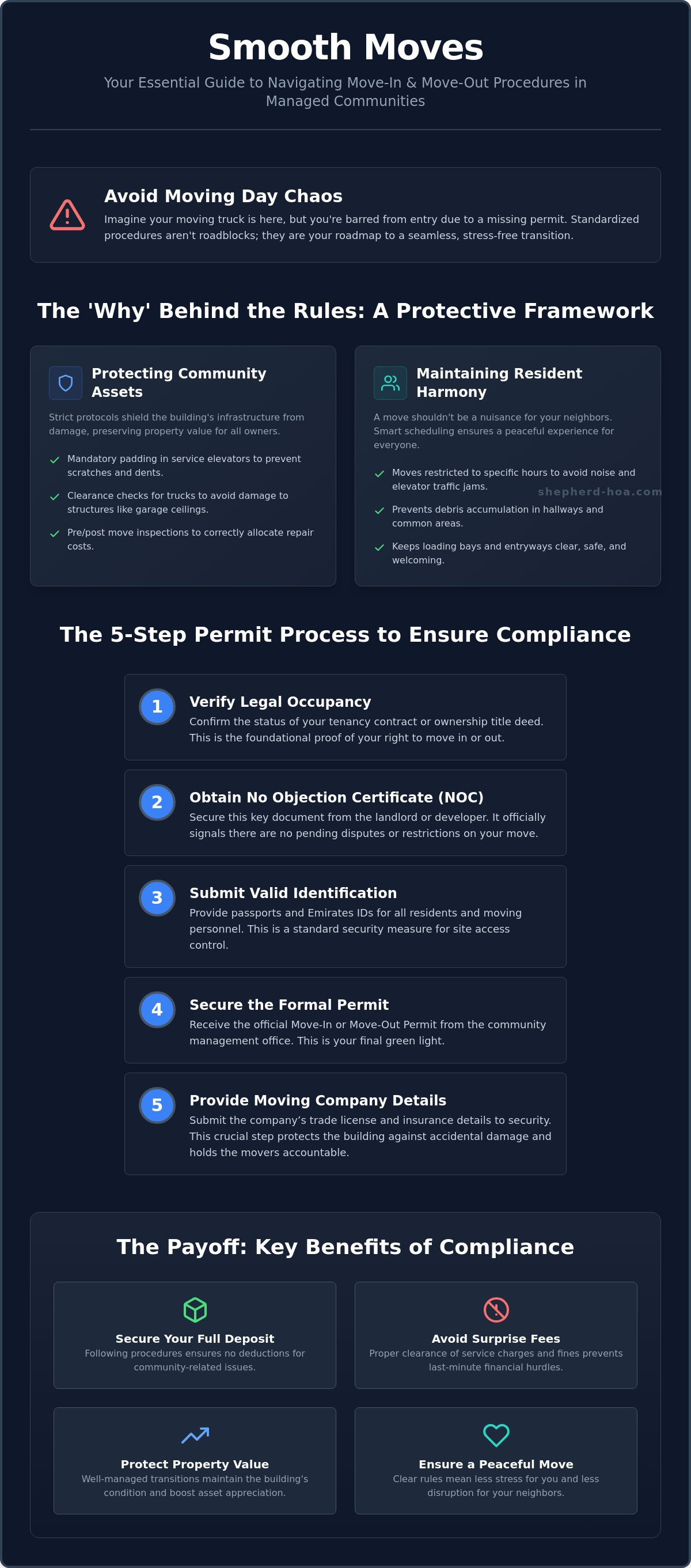
Moving day is often viewed through the lens of personal logistics, but for a managed building, it represents a significant operational event. Standardized moving in and out procedures for managed buildings aren't just administrative hurdles. They serve as a protective framework designed to ensure the physical and social integrity of the community remains intact. These protocols provide a clear structure that replaces potential chaos with organized control, giving every resident peace of mind.
The Owners Association acts as a steady guardian during these transitions. By implementing clear protocols, they manage the influx of external contractors and heavy equipment that could otherwise disrupt the daily lives of hundreds of residents. This oversight ensures that the community remains a functional, high-value environment. It's about more than just moving boxes; it's about maintaining the delicate balance of shared living spaces during high-traffic events.
There's a direct correlation between strict moving protocols and long-term asset appreciation. When common areas are shielded from the accidental damage caused by frequent, unmanaged moves, the building retains its premium feel. This meticulous care is a core component of professional property management procedures, which prioritize the preservation of collective wealth over individual convenience. A well-maintained building naturally commands higher resale and rental values, benefiting every owner in the long run.
Protecting Common Assets
High-traffic transitions put immense strain on a building's infrastructure. Without oversight, heavy furniture can easily gouge hallway plaster or crack expensive lobby tiling. Management ensures that moving companies adhere to building-specific weight and size restrictions to prevent structural or mechanical strain. Standard protections often include:
Mandatory padding for service elevators to prevent scratches and dents.
Clearance checks for large moving trucks to prevent damage to low-hanging garage ceilings.
Specific pathways for movers to keep high-traffic resident areas clear.
Conducting pre-move and post-move inspections of common areas allows management to identify damage immediately. This ensures that repair costs are allocated to the responsible party rather than being absorbed by the community's general fund, protecting your security deposit and the association's budget.
Maintaining Resident Harmony
A move shouldn't be a nuisance for your neighbors. Effective scheduling is the key to ensuring that living in a dubai community remains a peaceful experience for all. By restricting moves to specific hours, management prevents elevator bottlenecks during morning commutes and limits noise during quiet evenings. These procedures also uphold the community's aesthetic standards. They prevent the accumulation of packing debris in hallways and ensure that loading bays are used correctly, keeping entryways clear and welcoming for everyone.
Essential Documentation and the Permit Process
Securing the right paperwork is the foundation of a successful transition. For many residents, the administrative side of moving feels like a hurdle, but these steps are designed to protect both the building and your personal liability. Following the standard moving in and out procedures for managed buildings ensures that every party is held accountable for the safety and integrity of the property. This methodical approach replaces operational stress with a sense of organized control and professional oversight.
The permit process typically follows five clear steps to ensure total compliance with community regulations:
Step 1: Verify the status of your tenancy contract or ownership title deed to confirm legal occupancy.
Step 2: Obtain a No Objection Certificate (NOC) from the landlord or developer, which signals that there are no pending disputes or restrictions.
Step 3: Submit valid identification, such as passports and Emirates ID cards, for all residents and moving personnel entering the site.
Step 4: Secure the formal Move-In or Move-Out Permit from the community management office.
Step 5: Provide the moving company’s trade license and insurance details to the security team for site access.
This final step is crucial because it protects the building's common assets against accidental damage. Many urban environments have common moving rules and regulations that require moving companies to carry specific liability coverage before they can even enter the loading bay. If you find this documentation phase overwhelming, partnering with an expert team like the Shepherd HomeOwners' Association can help streamline these requirements through digital permit systems.
The Move-In Permit (MIP) Requirements
To secure a Move-In Permit, you'll need to present your signed Ejari or lease agreement alongside identification for all occupants. Management teams also require confirmation that your utility accounts are fully set up and active. This ensures that the unit is ready for habitation and prevents the use of building-wide resources for individual needs. Providing your moving company’s details in advance allows security to pre-verify their credentials, preventing delays at the gate on your first day.
The Move-Out Permit (MOP) and Clearances
The Move-Out Permit focuses heavily on financial and physical closure. Management will verify that all outstanding service charges are settled through official government systems. You'll also need a final clearance certificate from the facility management team, which confirms that no damage occurred to the unit or common areas during your residency. This NOC is the key to releasing you from building-related obligations and is often required by landlords before they can process your security deposit refund.
Logistics: Coordinating with Building Security and Management
A move is a high-stakes operation where success depends on the seamless coordination between your moving team and the building’s on-site staff. While the documentation mentioned earlier provides the legal right to move, the physical logistics require active management to avoid delays. Adhering to the specific moving in and out procedures for managed buildings ensures that your furniture reaches your new home without a single confrontation or bottleneck. This stage is about transforming a complex physical task into a predictable, well-governed event.
The security desk acts as the primary point of contact on moving day. You must establish clear communication channels between your movers and the security team to ensure everyone understands the site-specific constraints. This includes verifying the exact location of the designated loading bay and understanding any height restrictions for large trucks. Professional movers should check in with security immediately upon arrival to receive their temporary access passes and a briefing on the permitted routes through the building.
Post-move waste management is a frequently overlooked aspect of community harmony. Most managed buildings prohibit the disposal of bulky packing materials, such as large cardboard boxes and plastic wrap, in standard trash chutes or residential bin rooms. You're responsible for ensuring your moving company removes all debris from the site. Leaving packing materials in common hallways isn't just a breach of etiquette; it's often a fineable offense that can impact your final financial clearance.
Elevator and Access Management
Service elevators are a finite resource in any high-rise community. You should reserve your dedicated slot through the community portal at least one week in advance to avoid conflicts with other residents. Be aware of "blackout periods," typically during weekends or public holidays, when moving activities are restricted to preserve the quiet enjoyment of the building for all residents. A typical move for a three-bedroom apartment generally requires a dedicated service elevator booking of four to six hours.
Damage Mitigation and Security Inspections
Protecting the building's common areas is a shared responsibility that safeguards your security deposit. Most management teams require movers to install temporary floor and wall protection in hallways and around elevator doors before the first box is moved. Before the work begins, conduct a joint walkthrough with a security officer to document the existing condition of the common area pathways. This proactive step ensures that you aren't held liable for pre-existing scuffs or dents, maintaining a transparent and fair process for everyone involved.
Financial Compliance and Service Charge Clearances
Financial integrity is the backbone of community stability. Before you can finalize your transition, you must resolve all financial obligations to the Owners Association. These moving in and out procedures for managed buildings act as a safeguard for the collective budget, ensuring that no individual debt compromises the building's operations. Management teams require a "Zero Balance" certificate to confirm that all dues are settled, which serves as a definitive green light for your move.
Settling your account isn't just about paying monthly dues. It also involves resolving any outstanding fines for community rule violations. These might include penalties for improper waste disposal, noise complaints, or unauthorized modifications to your unit. Resolving these issues is essential for achieving the financial clearance required for a smooth exit. If you need assistance managing these administrative hurdles, the Shepherd HomeOwners' Association offers expert service charge collection and financial oversight to keep your community accounts in perfect order.
Navigating the Mollak System
In the UAE, the financial side of moving is governed by the Mollak Dubai system. This platform ensures that service charge collection is transparent and fully regulated. If there are outstanding arrears on a unit, the system will automatically block the issuance of a move-out permit. This is a common point of friction that can be avoided by verifying your account status early. A healthy community service charge budget is what allows the building to maintain the very standards that protect your property value, making it vital for all residents to stay current with their payments.
Security Deposit Integrity
Your security deposit refund is often tied directly to the successful completion of these procedures. Landlords rarely release funds until they receive the official move-out clearance from the building management. This document proves that you've fulfilled your duty of care toward the common assets and the community's financial health. To ensure a clean exit, always request a final statement of account at least two weeks before your planned move date. This gives you ample time to dispute any discrepancies and secure your full refund without last-minute stress. By following these structured protocols, you protect your financial interests while contributing to the overall social harmony of the building.
How Shepherd HOA Simplifies Your Building Transition
Shepherd HOA serves as a steady, expert guide through the complexities of property transitions. We recognize that the administrative burden of moving can feel overwhelming. This is why we've streamlined the moving in and out procedures for managed buildings into a seamless digital experience. Our commitment to professional guardianship ensures that while you focus on your new home, the integrity of the community's assets remains protected. We act as the invisible backbone of the process, replacing operational stress with a sense of organized control.
We utilize integrated community management software to handle all digital permit applications. This technology removes the need for physical paperwork and eliminates the frustration of waiting for office hours. You can upload required identification, insurance certificates, and utility clearances directly through our portal. Our team reviews these documents with precision, providing you with a definitive green light for your move. This directness ensures that you can plan your logistics with absolute confidence.
Beyond the paperwork, we provide active oversight of third-party contractors. We ensure that moving companies adhere to building-specific standards, from elevator padding to loading bay protocols. By providing residents with clear, actionable checklists well in advance of their moving date, we eliminate the fear of being blocked by security. This proactive approach preserves the building's aesthetic and functional value, benefiting the entire community.
The Advantage of Professional Governance
Professional owners association management creates a predictable environment for both new and departing residents. We act as a neutral mediator between residents, landlords, and developers to resolve disputes before they delay your transition. Our team ensures that every procedure complies with national RERA regulations and local strata laws. This high level of governance protects your financial interests and ensures that the building remains a premier place to live.
Next Steps for a Stress-Free Move
Starting your transition the right way begins with early preparation. You can access the Shepherd HOA resident portal today to download your comprehensive moving checklist and verify your compliance status. If you have specific questions about your building's logistics, your dedicated community manager is available to provide expert guidance. Take control of your moving day by securing your permits and clearing your financial obligations well in advance of your transition date.
Mastering Your Next Community Transition
A successful move is built on early preparation and a deep respect for community governance. By securing your essential permits and verifying your financial status through systems like Mollak, you ensure a transition that is both efficient and legally sound. These moving in and out procedures for managed buildings are not just administrative rules; they are the protective framework that maintains the long-term value of your asset and the social harmony of your neighborhood. You now have the roadmap to navigate these requirements with confidence and professional precision.
Since 2010, our team has acted as a watchful guardian for communities across the nation, ensuring every resident transition is handled with care. As a RERA-approved management partner, we provide expert financial reporting and Mollak oversight to keep your community running at its best. We replace the stress of complex administrative tasks with reliable, transparent solutions that prioritize your peace of mind. Streamline your community management with Shepherd HOA and experience the benefit of a partner who values integrity above all else. Your next chapter deserves a perfect, organized start.
Frequently Asked Questions
Why do I need a move-in permit if I already have a signed lease?
A signed lease confirms your legal right to occupy the unit, while a move-in permit confirms your compliance with the building's operational rules. Management uses this process to verify your identification and ensure your moving company meets insurance requirements. This step is a vital part of the moving in and out procedures for managed buildings, as it allows the security team to coordinate access without compromising the safety or social harmony of other residents.
How far in advance should I apply for a move-out permit?
You should apply for your move-out permit at least five to seven working days before your planned departure. This timeframe provides the community management team enough room to verify your financial standing and confirm that all service charges are settled. Early application also guarantees you a slot for the service elevator, preventing last-minute logistical bottlenecks that could delay your moving truck and increase your total relocation costs.
Can I move my furniture on a weekend or public holiday?
Most managed communities prohibit moving activities on weekends and public holidays to preserve a peaceful environment for all residents. These "blackout periods" are standardized across many professional developments to minimize noise and elevator congestion during peak leisure times. You should always consult your specific community handbook or resident portal to verify the permitted moving hours before you finalize your contract with a moving company.
What happens if my moving company damages the elevator or hallway?
The resident remains financially liable for any damage caused to common areas by their chosen moving company. If a hallway wall is scuffed or an elevator panel is dented, the cost of repairs is typically deducted from your security deposit or added to your service charge account. Conducting a joint walkthrough with security before and after the move is the best way to document the building's condition and protect your financial interests.
Are there any fees associated with obtaining a move-in or move-out permit?
Administrative fees for permits vary depending on the specific community's bylaws and management structure. Some buildings charge a small processing fee, while others may require a refundable security deposit to cover potential damage to common assets. It's best to check the latest fee schedule on your resident portal so you can budget accurately for these moving in and out procedures for managed buildings and avoid any financial surprises on moving day.
Do I need a permit for moving small items or just large furniture?
Permits are generally required for any move involving large furniture, appliances, or bulk items that necessitate the use of service elevators and loading bays. If you're simply bringing in a few suitcases or small parcels that fit in a standard passenger lift, a formal permit is usually unnecessary. However, if your items require multiple trips or professional movers, you must secure official approval to avoid being stopped by the on-site security team.
What is the role of Mollak in the move-out process?
Mollak serves as the official government system for verifying that all community service charges are fully paid before a resident vacates. Building management teams use this platform to ensure financial transparency and protect the association's budget. If the system shows outstanding arrears, your move-out permit will likely be withheld until the balance is cleared. This ensures that every departing resident leaves the community in good financial standing and fulfills their obligations.
Can building security block my moving truck if I don’t have a permit?
Building security has the authority to deny entry to any moving truck that lacks a valid, pre-approved permit. As guardians of the property, security personnel must verify the credentials of every contractor entering the site to prevent unauthorized access and potential damage. Attempting to move without the correct documentation will result in significant delays and may lead to fines from the Owners Association for non-compliance with community regulations.


Comments