
RERA Rules for Owners Associations: The Complete 2026 Compliance Guide

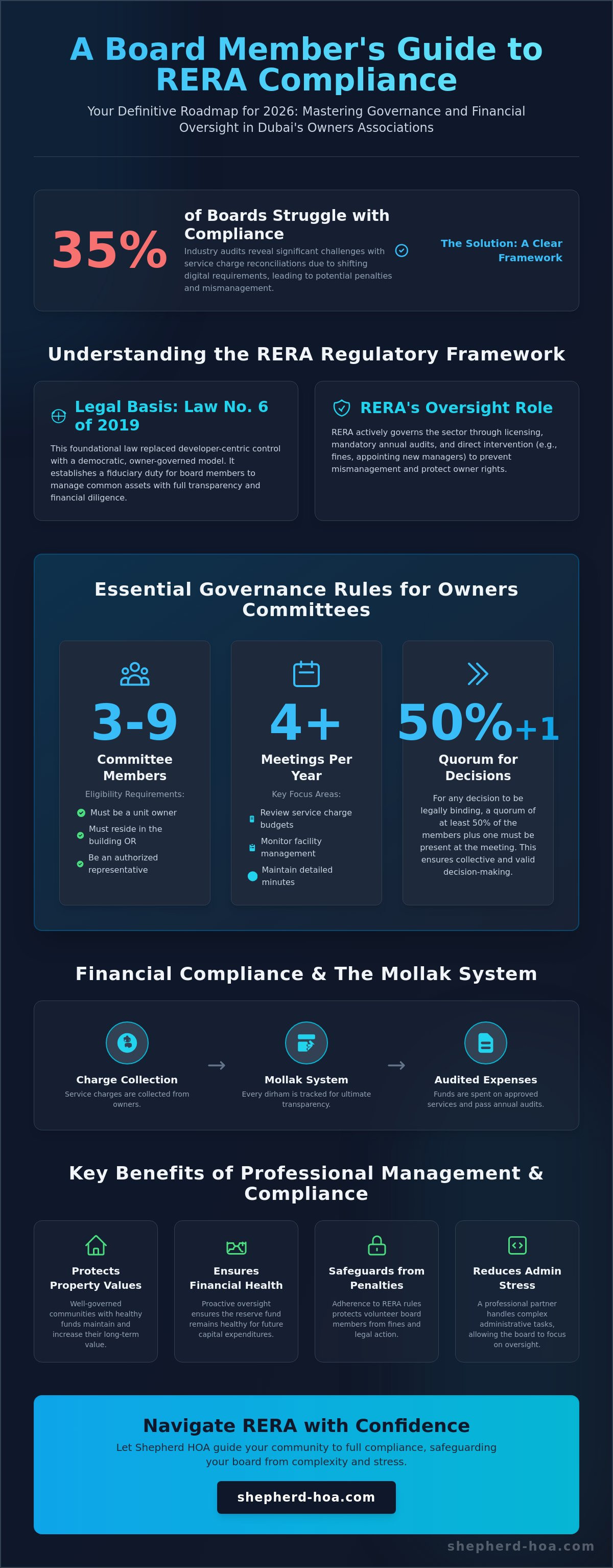
In 2024, industry audits revealed that nearly 35% of community boards struggled with service charge reconciliations due to shifting digital requirements. As a board member, you act as a shepherd for your neighborhood's future, yet the complex evolution of rera rules for owners associations can make that protective role feel overwhelming. You likely stepped into this volunteer position to build a better community, not to spend your weekends deciphering legal terminology or fearing the financial penalties of an accidental oversight.
We believe that clear oversight should lead to peace of mind, not more stress. This guide provides a definitive roadmap for 2026 compliance, stripping away the confusion to help you master essential governance requirements. You'll gain a transparent framework for financial reporting and learn how to manage official systems without the usual administrative headaches. We'll preview the specific steps for legal rule enforcement and service charge management that will safeguard your property values and restore harmony to your community's daily operations.
Key Takeaways
Gain a clear understanding of the transition to owner-led governance to ensure your community operates with full legal authority and transparency.
Master the essential eligibility and meeting requirements to maintain a compliant Owners Committee that makes valid, binding decisions for the neighborhood.
Navigate the Mollak system effectively to streamline service charge approvals and ensure your community follows all rera rules for owners associations.
Establish a comprehensive Facilities Management plan that protects common areas and preserves property values through proactive, organized oversight.
Identify the critical benefits of professional management partnerships to safeguard your board from the complexities of regulatory oversight and administrative stress.
Table of Contents Understanding the RERA Regulatory Framework for Owners Associations Essential Governance Rules for Owners Committees Financial Compliance and Mollak System Requirements Common Area Management and Maintenance Standards Ensuring Long-Term Compliance with Professional Management
Understanding the RERA Regulatory Framework for Owners Associations
The Real Estate Regulatory Agency (RERA) serves as the primary governing body for Dubai's property sector, providing the structure needed for community stability. For years, developers held the reins of community management, but the landscape shifted toward a more democratic, owner-governed model. This transition ensures that those with the most at stake, the property owners themselves, have a direct say in how their buildings and common areas are maintained. It's a move that replaces developer-centric control with a system of collective responsibility and professional oversight.
The 2026 regulatory updates represent a significant push for transparency, requiring associations to provide more granular financial reporting than ever before. These rera rules for owners associations aren't just bureaucratic hurdles; they're essential safeguards for your property's value. When a community is well-governed, maintenance stays on track and the reserve fund remains healthy. This protects your long-term investment from the risks of mismanagement and ensures that the physical assets of the community don't deteriorate over time. By following these updated standards, boards can act as steady guardians of their neighborhood's future.
The Legal Basis: Law No. 6 of 2019
Law No. 6 of 2019 provides the statutory foundation for jointly owned property in Dubai. It replaced previous regulations to offer a more nuanced approach to management, categorizing developments into three distinct tiers: mega projects, hotel projects, and simple projects. Each category has tailored requirements that reflect the complexity of the building's operations. This law ensures that developers cannot unilaterally control service charges or maintenance contracts indefinitely. Members of an association board hold a fiduciary duty to manage common assets with absolute transparency and financial diligence.
The Role of the Regulatory Authority
RERA maintains strict oversight through its Mollak system, which tracks every dirham of service charges collected and spent. The authority's functions include licensing management companies and conducting mandatory annual audits to prevent the misappropriation of funds. While the framework is built on the principles found in the Real Estate (Regulation and Development) Act, 2016, the local application focuses heavily on protecting the rights of the individual owner within a collective.
If a management company fails to meet its obligations or if financial irregularities arise, RERA has the authority to intervene directly. They can appoint a new manager, freeze bank accounts, or levy fines to ensure community standards don't slip. This level of protection is a cornerstone of RERA Dubai: The Complete 2026 Guide to Real Estate Regulation, which serves as a roadmap for compliant governance. Having a clear regulatory partner ensures that volunteer board members don't have to carry the burden of enforcement alone; they have a legal framework that supports their efforts to maintain harmony and value.
Essential Governance Rules for Owners Committees
The Owners Committee acts as the community’s guardian, ensuring the management company delivers on its promises. Under Law No. 6 of 2019, a committee must consist of 3 to 9 members. To be eligible, you must be a unit owner who resides in the building or an authorized representative. These volunteers serve as the eyes and ears of the neighborhood, providing a layer of protection for every homeowner's investment. Following the rera rules for owners associations ensures that this oversight remains legally sound and effective.
Efficiency depends on structure. RERA mandates that committees meet at least 4 times per calendar year to maintain active oversight. For any decision to be legally binding, a quorum of at least 50% of the members plus one must be present. These sessions focus on reviewing service charge budgets and monitoring the performance of the facility management provider. While the committee provides essential guidance, it cannot unilaterally sign contracts or change service providers without General Assembly approval. Managing these requirements feels simpler when you have a reliable administrative partner to track your meeting cycles and compliance deadlines.
Documentation is the backbone of community harmony. To pass the mandatory annual audit, committees must maintain detailed minutes of every meeting and a record of all formal resolutions. These records must be kept for a minimum of 7 years to satisfy regulatory inspections and financial reviews. This disciplined approach to record-keeping prevents administrative headaches and ensures the association remains in good standing with the authorities.
Election Protocols and Committee Terms
Conducting a General Assembly requires precision. You must send formal notices to all owners 21 days before the scheduled meeting date. During the 2026 compliance cycle, ensure you have a verified list of unit entitlements to confirm voting eligibility. A committee term lasts for 3 years, providing the stability needed for long-term planning. If a member resigns mid-term, the remaining board can appoint a replacement to serve until the next General Assembly, provided the total number of members stays within the legal 3 to 9 person limit.
Voting Rights and Conflict of Interest
Voting isn't a simple "one person, one vote" system. It's calculated by unit entitlement, which reflects the specific square footage or value of the property owned. This ensures that those with the largest financial stake have a proportional voice in community decisions. Transparency is non-negotiable within the rera rules for owners associations. Members must disclose any commercial ties to vendors or service providers immediately to maintain their fiduciary duty. If a member fails to disclose a conflict of interest, any decision influenced by that member is legally void and may lead to immediate removal by RERA.
Financial Compliance and Mollak System Requirements
The Mollak system serves as the digital backbone for every homeowners association in Dubai. It acts as a mandatory financial gateway that ensures every dirham collected from owners is tracked, audited, and spent appropriately. Under the current rera rules for owners associations, board members cannot manage community funds through private or unauthorized accounts. All financial activities must flow through this centralized platform to maintain the highest levels of fiduciary integrity.
RERA requires a clear separation of community wealth into two distinct categories. The General Fund covers day-to-day operational expenses such as utility bills, security services, and routine maintenance. The Reserve Fund functions as a protective shield for the property, earmarked for long-term capital expenditures and emergency structural repairs. This dual-fund structure prevents the depletion of long-term assets to cover short-term operational deficits, ensuring the community remains solvent for decades to come.
Transparency extends to how third-party providers receive payment. All service providers must be registered within the Mollak system. When an association pays for a repair or a service, the transaction is recorded and visible to regulators, which eliminates the risk of kickbacks or unauthorized spending. This level of oversight provides board members with a sense of organized control and protects them from personal liability.
Service Charge Calculation and Auditing
Board members must submit a detailed annual budget for regulatory approval via Mollak before any invoices reach homeowners. This budget must reflect actual historical data and projected needs for the upcoming year. For a deeper dive into the specific mechanics of this process, see our guide on Understanding Mollak Dubai: The Complete 2026 Guide to Service Charges and Compliance. Once RERA approves the budget, the system generates unique invoices for each unit. Compliance also dictates that associations must appoint an external audit firm from the RERA-approved list to verify financial statements annually. This audit ensures that the rera rules for owners associations are followed and that the community's financial health is accurately reported to all stakeholders.
Managing Arrears and Legal Recourse
Collecting unpaid service charges is a critical duty for maintaining community harmony. RERA provides a standardized legal framework for managing arrears that protects the association's cash flow. The process follows a strict timeline:
Formal Notice: A legal notice must be served to the defaulting owner, typically providing a 30-day window to settle the debt.
RERA Filing: If the debt remains unpaid after the notice period, the association can escalate the matter through the Rental Dispute Center.
Execution: The court can eventually order the sale of the property to recover the owed funds.
Associations must remember that they cannot take the law into their own hands. It is illegal to penalize non-paying owners by cutting off utility services or restricting access to essential facilities. Following the approved legal channels is the only way to ensure the association remains compliant while protecting the property's collective value.
Common Area Management and Maintenance Standards
Defining the boundary between common areas and private property is the primary step toward legal compliance. Under Law No. (6) of 2019, common areas include the building's structure, foundations, roofs, lobbies, and shared MEP (mechanical, electrical, and plumbing) systems. Private property ends at the unit's internal skin. As a board member, your duty of care centers on these shared assets. Maintaining them isn't just about aesthetics; it's a statutory requirement to preserve property values and ensure resident safety. The rera rules for owners associations mandate that every community maintain a comprehensive Facilities Management (FM) plan. This plan serves as a roadmap for the community's health, detailing every scheduled inspection and repair for the next 12 months.
Safety regulations have become more stringent for 2026. All associations must now demonstrate 100% integration with Dubai Civil Defense monitoring systems, such as Hassantuk. This ensures that fire life safety systems are monitored 24/7. Infrastructure maintenance extends to elevators, water tanks, and swimming pools, which require quarterly certification from RERA-approved inspectors. Neglecting these standards can lead to significant fines or even the suspension of the management company's license. By treating the community's infrastructure with the same diligence a shepherd treats a flock, boards can prevent small leaks from becoming catastrophic financial floods.
Tendering and Contract Oversight
Transparency is the foundation of ethical community management. RERA requires a "three-quote" rule for any significant expenditure, typically defined as contracts exceeding AED 50,000. Boards must evaluate these bids based on technical competence and financial stability, not just the lowest price. It's essential to verify that all contractors, especially those in cleaning and security, hold active licenses and comprehensive insurance coverage. Regular performance monitoring is a legal necessity. You should implement monthly Key Performance Indicators (KPIs) to hold service providers accountable for their work. This disciplined approach protects the community's funds from being wasted on substandard services.
Sustainability and Energy Efficiency Mandates
The 2026 regulatory landscape introduces new requirements for energy consumption reporting. Owners Associations are now required to submit annual energy audits to RERA, highlighting efforts to reduce the community's carbon footprint. RERA offers incentives, such as streamlined approval processes for service charge budgets, to communities that implement green initiatives like LED retrofitting or smart irrigation. These sustainability efforts directly impact the bottom line. You can learn more about aligning these goals with your financial planning in our guide on Mastering the Community Service Charge Budget in Dubai: A 2026 Board Member’s Guide. Following these rera rules for owners associations ensures your community remains both compliant and cost-effective.
Ready to bring professional oversight to your neighborhood? Contact us to modernize your community management today.
Ensuring Long-Term Compliance with Professional Management
Managing a community requires more than just good intentions. While some boards attempt self-management to save costs, the complexity of rera rules for owners associations in 2026 makes this a high-risk gamble. Volunteer board members often find themselves buried under 50-page legal updates and technical filing requirements. This administrative weight frequently leads to missed deadlines and non-compliance fines. A professional management firm acts as a shield, protecting the board from these liabilities while ensuring the community remains in good standing with the Dubai Land Department.
Licensed management firms provide a layer of fiduciary oversight that preserves property value. Industry reports indicate that professionally managed communities typically maintain service charge collection rates 20% to 30% higher than self-managed counterparts. This financial stability allows for better maintenance of common areas, which directly impacts the resale price of every unit. We call this the Shepherd approach. It focuses on proactive compliance and community harmony rather than just reacting to crises as they arise. By acting as a watchful guardian, a professional manager prevents small issues from becoming expensive legal headaches.
Selecting a RERA-Approved Management Partner
Choosing the right partner is the most critical decision a board will make. You need a team that understands the technical nuances of the Mollak system and the administrative rigor required for 2026 standards. Use this checklist to evaluate your options:
Verify a valid RERA management license and a clean disciplinary record.
Review their track record for timely 100% compliance in Mollak filings over the last 24 months.
Assess their transparency tools for financial reporting and service charge tracking.
Confirm they have specialized expertise in Dubai's specific regulatory environment.
For a deeper look at what separates top-tier firms from the rest, read our resource on Owners Association Management in Dubai: The 2026 Guide to Community Excellence.
The Future of Community Governance
Regulatory standards in Dubai are moving toward total digital transparency. By 2027, the integration of AI-driven audits and real-time financial reporting will likely become the baseline expectation for all owners associations. Professional management ensures your community is ready for these shifts. It replaces the stress of manual record-keeping with seamless, automated systems that provide peace of mind to every homeowner. If you're concerned about your current standing, it's time to act. A professional compliance audit can identify gaps in your governance before they lead to RERA sanctions. Secure your community's future by choosing a partner that values integrity and long-term stability.
Strengthen Your Community’s Compliance Strategy
Navigating the 2026 regulatory landscape requires a disciplined approach to the Mollak system and proactive Owners Committee oversight. Adhering to the latest rera rules for owners associations isn't just a legal necessity; it's the foundation for protecting your neighborhood's financial health and long-term property values. By prioritizing transparent financial reporting and rigorous maintenance standards, boards can replace administrative stress with a sense of organized control and professional stability.
Since 2010, Shepherd HOA has served as a steady guide for volunteer boards, providing the deep regulatory expertise needed to manage complex compliance tasks. We specialize in Mollak system management and maintain a proactive governance model that focuses on preserving the assets you've worked hard to build. Our team acts as an invisible backbone, ensuring your community remains a peaceful and well-maintained place to live. Secure your community’s future with a professional compliance audit from Shepherd HOA. You've taken the first step by staying informed; now let's ensure your association is fully protected for the years ahead.
Frequently Asked Questions
What is the role of RERA in an Owners Association?
RERA acts as the primary regulatory body that oversees the legal and operational framework of Owners Associations in Dubai. It enforces Law No. 6 of 2019 to ensure transparency in financial management and community governance. This oversight protects property values by holding management companies and board members accountable to strict administrative standards. It's a system designed to provide a secure environment for your investment.
Can an Owners Association fine a resident for rule violations?
Owners Associations can't directly issue fines; only the management company or RERA can do so after obtaining specific approvals. Under the 2019 Jointly Owned Property Law, any penalties for rule violations must be approved by RERA and clearly stated in the community's Master Community Declaration. This ensures that enforcement remains fair and follows a documented legal process. It protects residents from arbitrary or unfair penalties.
How are service charges determined under RERA rules?
Service charges are determined based on the annual budget submitted by the management company and approved by RERA through the Mollak system. The calculations follow a 100% transparency rule where expenses for maintenance, insurance, and utilities are divided among owners based on their unit's square footage. RERA requires an independent audit of these figures before any owner receives an invoice. This process ensures every dirham is accounted for correctly.
What happens if an Owners Association fails to comply with RERA regulations?
Failure to follow rera rules for owners associations results in financial penalties of up to 200,000 AED for management companies or developers. RERA also has the authority to replace an incompetent management firm or dissolve an Owners Committee if they fail to meet their fiduciary duties. These measures safeguard the community's assets. They ensure that governance remains stable and professional even when challenges arise.
Who is eligible to serve on an Owners Committee?
Any property owner who is current on their service charges and has no legal conflicts with the association can serve on the Owners Committee. According to RERA guidelines, the committee must consist of 3 to 9 members who are elected during the General Assembly. This volunteer role requires a commitment to protecting the community's interests through regular oversight. It's a vital position that helps maintain the neighborhood's long-term harmony.
Is the Mollak system mandatory for all communities?
The Mollak system is 100% mandatory for all freehold properties and community management companies operating in Dubai. RERA launched this digital platform in 2019 to track service charge payments and ensure that all funds are held in approved escrow accounts. It provides the essential oversight needed to prevent the misappropriation of community funds. Using the system is a key part of following rera rules for owners associations effectively.
How often must an Owners Association hold a General Assembly?
An Owners Association must hold a General Assembly at least once every 12 months to review the annual budget and elect committee members. Law No. 6 of 2019 mandates that a quorum of 25% of owners must be present or represented by proxy for the meeting to be valid. These meetings serve as a vital checkpoint for transparency. They allow residents to voice their concerns and stay informed about community management.
Can the developer still control the association after units are sold?
Developers lose their control over the management of the association once the project is registered with RERA and a management company is appointed. While the developer may own unsold units, they are treated as any other owner and must comply with the same regulations. This separation of powers prevents conflicts of interest. It ensures the community's health is managed by an independent professional entity focused on the owners' best interests.


Comments