
The Definitive Preventative Maintenance Plan for Residential Towers in 2026
- Sohrab Virani

- May 12
- 12 min read
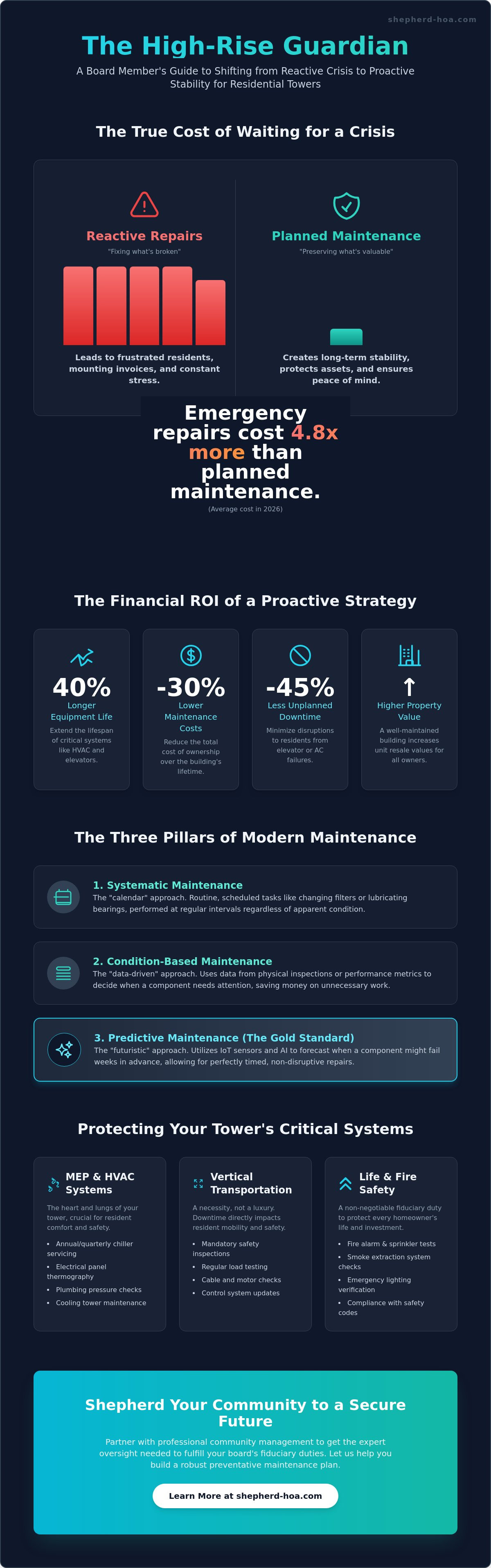
Did you know that emergency repairs in 2026 cost an average of 4.8 times more than planned maintenance? Implementing a robust preventative maintenance plan for residential towers is no longer just a suggestion; it's a vital fiduciary tool to protect your community's assets. As a board member, you likely feel the weight of responsibility when an elevator fails or the AC goes out, leading to frustrated residents and mounting invoices. It's exhausting to manage a community when you're constantly reacting to the next crisis instead of acting as a steady guardian for your property's stability.
We understand that managing a high-rise requires a clear, authoritative strategy to stay ahead of wear and tear. This guide will show you how to reduce operational stress and ensure your building remains compliant with the latest safety standards. You'll learn how to transition to a proactive model that can extend equipment life by up to 40% and keep your property value high. We'll walk through the essential roadmap for building longevity, from smart technology integration to meeting specific 2026 regulatory deadlines.
Key Takeaways
Shift your community from the stress of reactive repairs to a proactive, scheduled approach that ensures long-term building stability.
Protect the "heart" of your tower by prioritizing Mechanical, Electrical, and Plumbing (MEP) systems alongside the building envelope.
Discover how a structured preventative maintenance plan for residential towers reduces the total cost of ownership while increasing unit resale values.
Create a master Asset Register to establish clear maintenance standards based on manufacturer guidelines and national safety regulations.
Learn why partnering with professional community management provides the expert oversight needed to fulfill your board's fiduciary responsibilities.
Table of Contents
What is a Preventative Maintenance Plan for Residential Towers?
A preventive maintenance strategy is the backbone of a well-managed community. For a board member, a preventative maintenance plan for residential towers acts as a shield against the chaos of unexpected equipment failure. While reactive maintenance waits for a pipe to burst or an elevator to stall, this proactive approach schedules inspections and repairs before the damage occurs. It represents a shift in mindset from "fixing what's broken" to "preserving what's valuable." This transition is especially critical during the property handover phase when owners take over governance from the developer. At Shepherd HomeOwners' Association, we view this as a duty of care. Our philosophy is rooted in vigilant oversight that prevents small mechanical hiccups from escalating into community-wide crises. We guide boards through the complexities of budget planning and service charge collection to ensure these technical needs are always funded.
The Three Pillars of Tower Maintenance
Effective maintenance relies on three distinct layers of oversight. Systematic maintenance involves routine tasks, like changing filters or lubricating bearings every quarter, regardless of how the equipment appears. It's the "calendar" approach to building health. Condition-based maintenance is more specific. It uses data from physical inspections or performance metrics to decide when a component needs attention, saving money by avoiding unnecessary work on healthy parts. Finally, predictive maintenance is the modern gold standard. By utilizing IoT sensors and AI, boards can forecast when a pump might fail weeks before it happens. This layered strategy ensures nothing falls through the cracks of your administrative duties, providing a sense of organized control and peace of mind.
Why High-Rise Buildings Require Specialised Plans
Residential towers aren't just larger houses. They are complex vertical ecosystems that demand specialized care. A single high-pressure plumbing failure on the 40th floor can cause catastrophic damage to dozens of units below, creating a legal and financial nightmare for the association. Elevators are another critical point of failure. In a tower, they are a necessity rather than a luxury, and their downtime directly impacts resident mobility and safety. Centralized HVAC systems also require constant vigilance to maintain air quality and resident comfort in our climate. Because these systems are interconnected, a failure in one area creates shared liability. This affects every homeowner's investment and safety simultaneously. A tailored preventative maintenance plan for residential towers addresses these specific vertical challenges with precision, replacing the stress of the unknown with a clear roadmap for long-term stability.
Core Components of a Robust Maintenance Schedule
A preventative maintenance plan for residential towers is more than a simple checklist; it's a comprehensive strategy for building health. Think of it as a protective shield for your community's most expensive assets. By focusing on specific core components, board members can replace administrative stress with organized control. Research from Oxmaint in 2026 shows that structured programs lead to 30% lower total maintenance costs and 45% less unplanned downtime. This data underscores the importance of moving away from reactive "fix-it" models that drain budgets and cause resident frustration.
MEP and HVAC: The Critical Infrastructure
Mechanical, electrical, and plumbing (MEP) systems function as the heart and lungs of your tower. MEP maintenance represents the essential heartbeat of building functionality. Annual and quarterly servicing of chillers and cooling towers ensures the climate stays controlled even during peak summer heat. Electrical panel thermography is a vital tool here. It identifies heat signatures that signal potential fire risks or power outages before they occur. This level of oversight protects the community from the financial shock of unplanned downtime. Proper budget planning ensures these technical needs are always met without requiring emergency levies from homeowners.
Vertical Transportation and Life Safety
Safety is a non-negotiable fiduciary duty for every board member. Mandatory elevator safety inspections and load testing are critical for high-rise environments where residents depend on vertical mobility. You must also ensure that fire alarms, sprinklers, and smoke extraction systems are 100% operational at all times. Compliance with national fire and life safety codes is mandatory, especially in the post-Champlain Towers era. Using third-party certification helps verify that contractors are performing to the highest standards. This professional oversight ensures that your building remains a safe haven for all residents. Maintaining this level of detail is a massive undertaking for a volunteer board. Professional community management provides the steady guidance needed to oversee these technical requirements seamlessly.
Building Envelope and Common Areas
The building envelope is your tower's first line of defense against the elements. Regular inspections of the facade, roofing, and windows prevent environmental degradation from compromising the structure's integrity. Inside, common areas like gyms, pools, and lobbies require consistent care to maintain community harmony. Residents expect these amenities to be pristine and functional. When they are well-kept, property values remain stable and resident complaints vanish. A structured schedule ensures that these spaces stay as impressive as the day of the property handover, preserving the long-term appeal of the community.
The Financial ROI of Proactive Building Oversight
A preventative maintenance plan for residential towers is the most effective tool for lowering the total cost of ownership for homeowners. When mechanical systems fail unexpectedly, the financial burden is immediate and steep. Verified data from 2026 shows that emergency repairs can cost 4.8 times more than planned maintenance. By scheduling these tasks, you're not just fixing machines; you're protecting the community's bank account. This proactive approach replaces the stress of sudden, expensive levies with the peace of mind that comes from predictable financial planning.
Property values are directly tied to a building's physical state. Prospective buyers look at the health of the elevators and the condition of the facade long before they consider the view. A building with a reputation for frequent downtime or "special assessments" to cover failures quickly loses its market appeal. Maintaining a structured plan ensures that individual units retain their value. It signals to the market that the building is managed with integrity and professional oversight, making it a safe investment for years to come.
Fiduciary responsibility is a core concern for every board member. Without documented maintenance logs, you leave yourself vulnerable to liability claims if an accident occurs. Proactive oversight serves as a clear paper trail of your diligence. It proves that the board acted as a watchful guardian of the community's assets and safety. This documentation is your primary defense in showing that you've fulfilled your legal and ethical obligations to the homeowners you serve.
Budgeting for Longevity
Accurate data is the foundation of a successful financial strategy. Detailed maintenance logs provide the evidence needed for mastering the community service charge budget in Dubai. You need to distinguish between everyday maintenance funds and long-term reserve funds to ensure the building's future is secure. Think of the "Stitch in Time" principle. Spending 1% of the building's replacement value on maintenance today can prevent a 10% capital replacement cost later. It's a simple, logical calculation that leads to long-term stability.
Transparency and Service Charges
Transparency builds trust between the board and the residents. When homeowners see a structured preventative maintenance plan for residential towers in action, they understand exactly where their money goes. This clarity makes justifying service charge levels much easier during annual meetings. Professional owners association management in Dubai ensures that maintenance contracts are tendered ethically and transparently. Standardizing these reports creates a comforting cadence of information, replacing administrative confusion with a sense of organized control.
How to Create and Execute Your Maintenance Plan
Executing a preventative maintenance plan for residential towers requires moving from high-level strategy to granular, daily actions. It's a five-step process designed to instill confidence in your board's oversight. First, conduct a comprehensive Asset Audit to create a master Asset Register. You can't protect what you haven't identified. Second, define Maintenance Standards based on manufacturer guidelines and national safety regulations. Third, establish a Calendarized Schedule for all daily, weekly, and annual tasks. Fourth, select and vet service providers through a transparent tendering process. Finally, implement a Digital Oversight System to track work orders and completion rates in real-time. This methodical approach replaces the stress of paperwork with organized control and peace of mind.
Setting standards is where many boards fail to account for national fire and life safety compliance. In the post-2021 regulatory environment, these standards are non-negotiable. Your plan must include specific testing intervals for smoke extraction, fire pumps, and emergency lighting that align with local civil defense codes. By anchoring your schedule in these legal requirements, you fulfill your fiduciary duty while ensuring the highest level of protection for your residents. A well-executed plan doesn't just save money; it creates a legacy of safety and stability for the entire community.
The Asset Audit: Knowing What You Own
Every residential tower needs a professional inventory that goes beyond a simple spreadsheet. By using a "snagging" style approach, you identify minor defects before they become structural failures. Categorizing these items by "Criticality" allows the board to allocate funds where they're needed most. This ensures that the most vital systems receive the highest level of vigilance. For boards managing new buildings, this process should ideally begin during the property handover phase to ensure all developer obligations are met and documented.
Monitoring and Accountability
A plan is only as good as the oversight that enforces it. You must establish clear Key Performance Indicators (KPIs) for your maintenance contractors to measure their efficiency and reliability. Conducting random spot checks is also essential. These checks verify that "preventative" tasks, like checking valve seals or testing sensors, are actually performed rather than just checked off on a list. For boards that feel overwhelmed by these technical demands, partnering with professional community management ensures that every step of this execution is handled with integrity and precision.
Shepherding Your Community: The Role of Professional Management
Volunteer board members bring passion and local knowledge to their roles, but they shouldn't be expected to manage the intricate technicalities of a preventative maintenance plan for residential towers alone. High-rise infrastructure is a multi-million dollar asset that requires specialized oversight to remain safe and efficient. Shepherd HomeOwners' Association acts as a professional guardian, replacing the frantic energy of crisis management with a sense of organized control. We provide the invisible backbone that allows your community to thrive. Our experts ensure that every pump, electrical panel, and life safety system is watched over with expert care, preventing minor issues from becoming expensive disasters.
Our team ensures strict compliance with RERA and national regulations, shielding your board from the legal risks of deferred maintenance. By taking the administrative weight off your shoulders, we allow you to focus on the human side of community leadership. This partnership isn't just about technical checks; it's about providing the peace of mind that comes from knowing your building is in capable hands. We lead with results and efficiency, positioning your community for long-term stability and success.
Expert Tendering and Contract Management
Professional management brings the advantage of economies of scale. We leverage our industry relationships to secure better rates from top-tier contractors, ensuring your community gets the highest value for its service charges. By maintaining an "arm's length" relationship with vendors, we can enforce strict accountability and high performance standards without local politics interfering. We integrate Mollak-style transparency into all our maintenance reporting. This ensures that every dirham spent on your preventative maintenance plan for residential towers is tracked, audited, and visible to homeowners. This level of clarity fosters a culture of trust and financial integrity within the association.
Protecting the Future of Your Home
Consistent maintenance is the primary driver of community harmony. When facilities work perfectly and residents feel safe, complaints disappear and resident satisfaction rises. We view maintenance as a long-term vision rather than a series of chores. It's about building a legacy of quality that preserves property values for the next generation of owners. Your home is likely your most significant investment, and it deserves a watchful protector to ensure its longevity. If you're ready to secure your building's future and reduce your board's administrative stress, contact Shepherd HomeOwners' Association today for a comprehensive community audit.
Secure Your Community's Future Today
Transitioning your building's care from a reactive "fix-it" mentality to a structured preventative maintenance plan for residential towers is the most impactful decision a board can make. This shift preserves multi-million dollar assets and fosters a sense of organized control that residents deeply value. By prioritizing consistent oversight and technical compliance, you protect both the safety of your neighbors and the long-term appreciation of their property investments.
Managing these intricate requirements requires a partner who understands the unique landscape of UAE community governance. With over 15 years of expertise and RERA approved status, Shepherd HomeOwners' Association acts as a dedicated guardian for your tower's technical health. Our transparent, Mollak-integrated reporting provides the clarity you need to lead with integrity and peace of mind. Let Shepherd HomeOwners' Association protect your community with a professional maintenance strategy. We are ready to help you build a legacy of stability and excellence for the next generation of owners.
Frequently Asked Questions
What is the difference between planned and reactive maintenance?
Planned maintenance is a proactive, scheduled approach designed to prevent equipment failure before it occurs. In contrast, reactive maintenance involves repairing assets only after they have already broken down. Industry data from 2026 shows that emergency repairs cost an average of 4.8 times more than scheduled visits. This proactive strategy ensures that residents don't suffer through elevator downtime or AC failures during peak temperatures.
How often should a residential tower undergo a full maintenance audit?
You should conduct a comprehensive maintenance audit at least once every year to evaluate the state of all major assets. This annual review allows the board to update the master Asset Register and prioritize budget allocation based on the criticality of each system. For newer towers, this process is especially vital during the property handover phase to ensure all developer obligations are met while warranties are still active.
Can a preventative maintenance plan really lower our service charges?
Yes, a robust preventative maintenance plan for residential towers reduces service charges by avoiding the high costs of emergency call-out fees. By extending the life of major appliances and MEP systems by 20% to 40%, boards can delay expensive capital replacements. This organized control prevents the need for sudden special assessments, leading to more predictable and stable financial planning for all homeowners.
What are the most critical systems to maintain in a high-rise building?
Mechanical, Electrical, and Plumbing (MEP) systems are the most critical infrastructure components in any tower. Specifically, the centralized HVAC system, high-pressure water pumps, and elevators require constant, professional oversight. Life safety systems, including fire alarms and smoke extraction, are also paramount for compliance. Neglecting these "heart and lung" systems can lead to shared liability and safety risks for hundreds of residents simultaneously.
Who is legally responsible if building maintenance is neglected?
The homeowners association board holds the fiduciary duty to ensure the building remains safe and habitable. If maintenance neglect leads to property damage or safety violations, board members can be held accountable for failing to uphold their administrative responsibilities. Partnering with a professional community manager provides the documented proof of oversight needed to protect the board from liability and ensure compliance with national standards.
How do we choose the right maintenance contractor for our community?
Select contractors through a transparent tendering process that prioritizes technical expertise and proven response times over the lowest bid. Look for providers who offer digital reporting and can meet specific Key Performance Indicators (KPIs) for reliability. Professional managers often leverage their industry relationships to secure better rates from top-tier contractors, ensuring that your community receives expert care at an ethical price point.
Does a preventative maintenance plan include aesthetic repairs like painting?
Yes, maintaining the building envelope is a vital part of a preventative maintenance plan for residential towers. While MEP systems are the internal priority, regular facade inspections and painting prevent environmental degradation from compromising the structure. These aesthetic tasks preserve community harmony and help maintain high resale values for individual units by ensuring the building remains attractive to prospective buyers.
What role does technology play in modern building maintenance?
Modern technology enables a shift from calendar-based tasks to predictive maintenance using IoT sensors and AI. These tools can forecast potential failures before they happen, which can reduce emergency repair costs by up to 40%. Digital platforms also provide Mollak-integrated transparency, giving board members a real-time view of contractor performance and maintenance spending to ensure every dirham is used efficiently.


Comments