
Understanding Common Area Rules: A 2026 Guide to Community Harmony
- Sohrab Virani

- Jun 6
- 12 min read
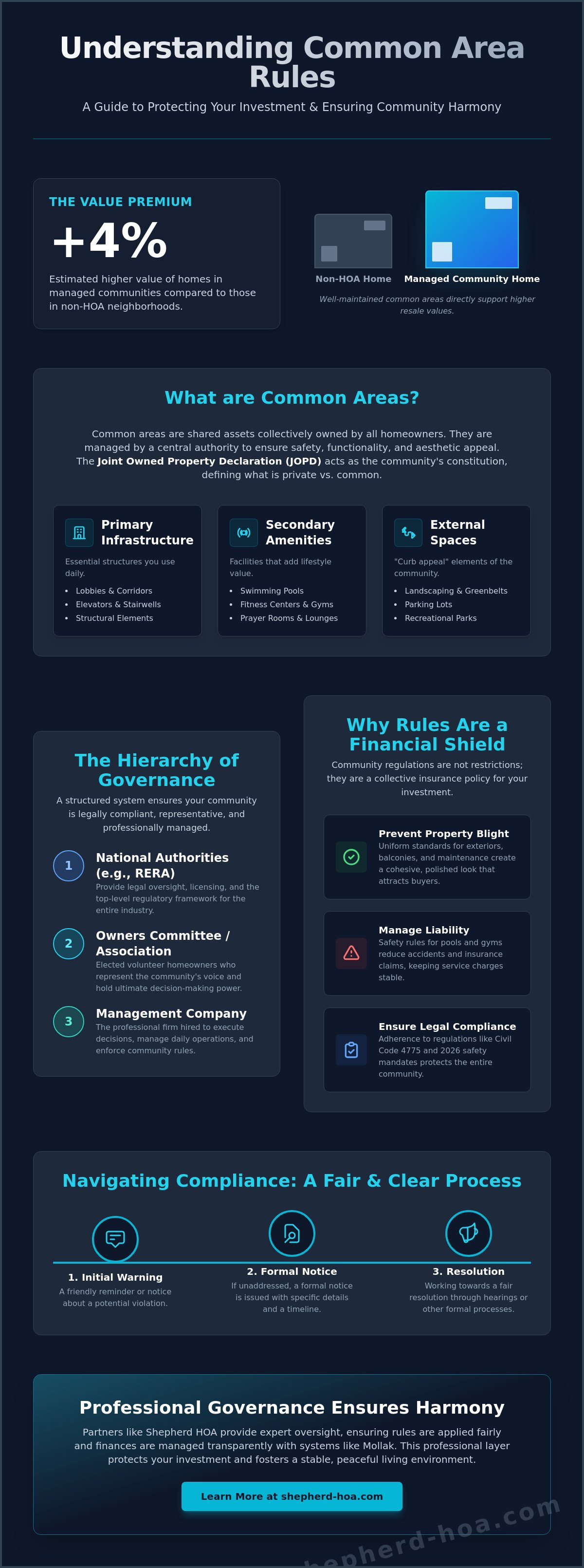
Did you know that homes in managed communities are valued about 4% higher than those in non-HOA neighborhoods? This premium isn't an accident. It's the direct result of understanding common area rules as a collective insurance policy rather than a list of restrictions. While it's easy to feel frustrated when a shared gym or pool policy seems rigid, these guidelines serve as a protective shield for your property value and your daily peace of mind.
You likely value the order of your community, yet you might feel confused by where your private space ends and shared assets begin. We recognize that neighbor disputes over amenities or administrative oversight can be stressful. This guide clarifies your community boundaries and explains how current 2026 regulations, such as the mandatory maintenance duties under Civil Code Section 4775, keep your environment stable. You'll discover how to coexist peacefully with neighbors while gaining confidence that your investment is being watched over by a steady, expert guide.
Key Takeaways
Learn to distinguish between private property and shared spaces like pools or greenbelts to ensure you're using community assets correctly.
Master understanding common area rules to protect your investment, as well-maintained shared spaces directly support property resale values.
Identify specific guidelines for exterior alterations and balcony usage to avoid unintended violations and maintain community aesthetics.
Understand the clear escalation path for compliance, from initial warnings to formal resolution, ensuring a fair and peaceful living environment.
See how professional oversight from partners like Shepherd HOA uses systems like Mollak to provide the financial transparency needed for community stability.
Table of Contents
What Are Common Areas and Who Governs Them?
A common area is more than just a hallway or a patch of grass; it's a shared asset that every homeowner has a stake in. Legally, these spaces are owned collectively by all unit owners in a development but are managed by a central authority to ensure they remain functional and safe. Understanding common area rules starts with recognizing that while you own the air space inside your home, the structural integrity and aesthetic value of the building depend on the collective management of these shared zones.
The legal foundation for this shared ownership usually rests on national strata laws or regional property regulations. These laws establish that individual owners cannot claim exclusive rights to shared facilities. To define these boundaries clearly, communities use a Joint Owned Property Declaration (JOPD). This document acts as the community's constitution. It specifies exactly which square meters are private and which are common, preventing confusion during maintenance or renovations. It's the ultimate guide for determining who is responsible for a leaking pipe or a cracked sidewalk.
Effective governance requires a clear distinction between the Owners Association and the Management Company. The Owners Association is the legal entity made up of the homeowners themselves. It holds the ultimate decision-making power regarding the community's direction. In contrast, the Management Company is the professional firm hired to execute those decisions, handle daily operations, and enforce the rules. This partnership ensures that the burden of administration doesn't fall solely on the shoulders of volunteers, providing a layer of professional protection for your investment.
Identifying Shared Spaces in Your Community
Shared spaces aren't always obvious. Primary areas include the essential infrastructure like lobbies, elevators, stairwells, and corridors that you use daily. Secondary amenities add lifestyle value, such as swimming pools, fitness centers, and prayer rooms. Finally, external shared spaces encompass the "curb appeal" elements: landscaping, parking lots, and recreational parks. Each of these zones requires specific oversight to maintain the community’s overall asset value and social harmony.
The Hierarchy of Governance
Governance isn't a single layer; it's a structured system of protection. At the top are national regulatory authorities, such as RERA, which provide the legal oversight and licensing for the industry. Below them sits the Owners Committee. These are elected volunteers who represent the collective voice of the homeowners. Finally, the Management Company acts as the professional arm. They apply their expertise in budget planning and service charge collection to ensure the community runs smoothly. Understanding common area rules within this hierarchy helps residents know exactly where to turn for support or clarification.
Why Community Rules and Regulations are Essential for Property Value
Rules within a managed community aren't just administrative red tape; they're a strategic financial tool. Data shows that homes within homeowners' associations are valued approximately 4% higher than similar properties in non-managed areas. This premium exists because strict oversight prevents the gradual decline known as "property blight." When every resident adheres to the same standards for balcony use, signage, and exterior maintenance, the entire community maintains a polished, cohesive appearance. Understanding common area rules allows you to see these guidelines as a collective insurance policy that keeps your resale price competitive.
Consistency is the enemy of depreciation. If one neighbor chooses a non-compliant paint color or uses their balcony for heavy storage, it creates a visual fracture that buyers notice immediately. Beyond aesthetics, rules regarding shared amenities like pools and fitness centers manage your community's liability. A single safety incident in a poorly regulated gym can lead to massive insurance claims, which eventually drain the reserve fund and force service charges to rise. While specific regulations vary, many regions look to established frameworks like Washington State homeowners' association laws to define how boards can legally protect community standards and financial health.
As we move through 2026, new regulations emphasize the link between maintenance and value. For example, laws now require specific safety inspections for balconies and ember-resistant buffers in wildfire-prone zones. These aren't suggestions; they're mandatory duties that protect the structural integrity of the entire development. By controlling the usage of high-value shared assets, the community extends the lifespan of expensive equipment and infrastructure, delaying the need for costly replacements. A partner like Shepherd HOA can provide the steady oversight needed to balance rule enforcement with community needs, ensuring your asset remains protected.
Asset Protection and Longevity
Shared assets like elevators and HVAC systems have finite lifespans. Rules that limit the weight of move-in loads or restrict gym equipment to residents only prevent premature wear and tear. This proactive stance on common area maintenance (CAM) ensures that the building’s "bones" remain strong. When landscaping rules are followed, it doesn't just look good; it prevents root damage to foundations and ensures proper drainage across the site.
Social Harmony and Resident Retention
Clear expectations reduce friction. When everyone knows the quiet hours or the guest policy for the pool, neighbor disputes drop significantly. This organized environment is a major draw for high-quality tenants and buyers who value predictability. Living in a well-governed community provides an emotional benefit, replacing the stress of potential conflict with the peace of mind that comes from professional, transparent management.
Common Categories of Resident Rules You Should Know
While the legal framework provides the skeleton of community management, the resident rules are the heartbeat of daily life. Understanding common area rules means recognizing that shared spaces require shared discipline to function correctly. These regulations aren't meant to be restrictive. They're designed to ensure that one person's enjoyment doesn't come at the cost of another's peace. By following these guidelines, you contribute to a predictable environment where everyone knows what to expect from their neighbors.
Visual harmony is a cornerstone of managed living. Rules often dictate what you can place on balconies or what color you can paint your front door. This is tied to the legal definition of common areas, which frequently includes the exterior facade of the building. When residents avoid hanging laundry on balconies or installing unapproved signage, the architectural vision of the community remains intact. This collective discipline prevents the cluttered look that can quickly devalue a property.
Health and safety protocols form another critical category. Fire safety rules prohibit storing combustible materials in shared hallways or blocking emergency exits with strollers and bicycles. Waste management is equally vital. Proper disposal of household trash in designated chutes or bins prevents pest infestations and maintains hygiene in shared corridors. These rules act as a protective barrier, ensuring that the community remains a safe and clean place for all families.
Amenity Usage and Guest Policies
Amenities like pools and gyms are high-traffic zones that require clear boundaries. Standard quiet hours usually begin around 10:00 PM to protect residents living near these facilities. Guest limitations are also common; they ensure that the people paying the service charges always have priority access to the equipment and space. Many modern communities now use digital booking systems for BBQ areas or community rooms to prevent double bookings and ensure every resident has a fair chance to host events.
Parking and Traffic Management
Parking is often the most contentious part of understanding common area rules. Clear protocols distinguish between designated resident spots and visitor parking to prevent unauthorized vehicles from causing frustration. With the rise of micro-mobility, many communities now have specific rules for e-scooters and bicycles to keep walkways clear and safe. Speed limits within the gates are strictly enforced. This protect pedestrians, especially children playing in recreational parks, and maintains the calm atmosphere of the neighborhood.
Navigating Compliance and Resolving Common Area Disputes
Compliance doesn't have to be a source of anxiety for residents. When a violation occurs, the primary goal of the governance body is to restore community harmony rather than simply collect a penalty. Understanding common area rules includes knowing how the enforcement cycle works to protect your collective interests. Most managed communities follow a structured escalation path that favors education over punishment. It typically begins with a friendly reminder or a formal warning letter. If the behavior continues, a second notice usually follows before any financial penalties are applied. This measured approach gives residents ample time to correct the issue without unnecessary stress or conflict.
Professional management firms serve as a vital buffer between neighbors. Instead of confronting a neighbor directly over a noise complaint or a parking issue, you report the matter to your management partner. They act as an impartial mediator, ensuring that the rules are applied consistently and fairly to everyone. This prevents personal friction and maintains social stability within the building. If you receive a notice you believe is incorrect, you have the right to appeal. This process involves presenting evidence to the Owners Committee or the management office to clarify the situation. Transparency in this process is what maintains long-term trust in community governance.
The Reporting and Enforcement Process
Modern communities rely on digital portals to streamline communication and reporting. If you notice a maintenance issue or a conduct violation, using the official portal creates a documented trail that can be tracked to resolution. Attach photos or clear descriptions to help the management team assess the situation quickly. This documentation protects everyone involved; it ensures that enforcement is based on objective facts rather than hearsay. A professional firm like Shepherd HomeOwners' Association uses these tools to provide a fair, reliable resolution to every dispute, keeping the focus on property value and resident peace.
Staying Informed and Compliant
Knowledge is your best defense against accidental violations. Always keep a copy of your master community declaration or resident handbook nearby. These documents are updated periodically, so check for the latest 2026 versions to stay current on new regulations. Attending the Annual General Meeting (AGM) is also essential. It's your chance to hear about upcoming changes and voice your concerns directly to the board. You can also read more about living in a Dubai community to understand resident harmony. For boards looking to implement these fair enforcement practices, partnering with Shepherd HomeOwners' Association ensures your community remains a peaceful, well-organized place to live.
Professional Governance: How Shepherd HomeOwners' Association Ensures Harmony
Shepherd HomeOwners' Association approaches community management with a sense of duty that goes beyond basic administrative tasks. We view ourselves as guardians of your collective investment. While understanding common area rules is the first step for any resident, the second is having a management partner who enforces those rules with integrity and transparency. We don't just react to problems; we use proactive facility management to ensure that shared spaces are maintained to the highest standards. This prevents the gradual wear and tear that leads to resident frustration and declining property values.
Financial integrity is the backbone of our service. We utilize the Mollak system to provide absolute transparency in how service charges are collected and allocated. This system ensures that every dirham intended for common area upkeep is tracked and approved according to RERA guidelines. By maintaining this level of oversight, we instill confidence in homeowners that their contributions are directly enhancing the community's longevity. We work closely with Owners Committees to ensure that rules aren't just boilerplate templates but are tailored to the specific culture and needs of your neighborhood. This collaborative approach ensures that the governing documents actually serve the people living under them.
The Shepherd Approach to Management
Our management philosophy centers on the concept of "Guardianship." We treat every building, hallway, and landscape as if it were our own home. To achieve this, we leverage advanced technology for seamless communication and reporting. Our digital platforms allow residents to report issues or access documents in seconds, ensuring that maintenance requests never fall through the cracks. This high level of responsiveness is a key pillar of our owners association management services, where we provide the professional oversight necessary for community excellence.
Ensuring Long-Term Asset Growth
Social harmony is the result of long-term stability. We focus on strategic budget planning to ensure that funds are available for future common area renovations and structural repairs. This forward-thinking approach prevents the need for sudden special assessments that can cause financial stress for families. By remaining strictly compliant with all national regulatory standards and RERA approvals, we protect the legal standing of your community. Understanding common area rules is much easier when you have a partner who manages the technical complexities for you. Contact Shepherd HomeOwners' Association today to see how we can elevate your community management and protect your property's future.
Building a Legacy of Community Excellence
Your community's shared spaces represent the heart of its long-term value and social appeal. These areas require more than just basic maintenance; they need a structured framework of governance that balances individual rights with collective responsibility. By understanding common area rules, you contribute to an environment where property values remain protected and neighborly friction is replaced by organized control. Clear boundaries and professional oversight transform a collection of homes into a cohesive, thriving neighborhood.
Stability in managed living is best achieved through an expert partnership. Shepherd HomeOwners' Association provides RERA-approved community management and expert Mollak system integration to ensure your financial contributions are handled with total transparency. As a wholly Emirati-owned firm, we bring deep local expertise and a protective stance toward your assets. We invite you to Request a Professional Community Management Consultation to see how our guardianship can elevate your community. Together, we can build a legacy of harmony and integrity for every resident.
Frequently Asked Questions
What exactly is included in common area maintenance (CAM)?
Common area maintenance covers all costs required to keep shared spaces functional, safe, and clean. This typically includes landscaping, security services, elevator maintenance, and cleaning of lobbies and corridors. It also accounts for the utility bills of shared zones, such as the electricity for streetlights and the water used for community swimming pools.
Can the HOA change the common area rules without resident consent?
Board members generally have the authority to update "House Rules" to address immediate safety concerns or operational efficiencies. However, fundamental changes to the Master Community Declaration usually require a formal vote from the homeowners. This ensures that major shifts in community policy reflect the collective will of the people living there.
What should I do if a neighbor is constantly breaking community rules?
Avoid direct confrontation to prevent personal friction. The most effective step is to report the violation through your community portal with clear documentation, such as dates and photos. The management company then acts as an impartial mediator to resolve the issue according to the established enforcement path.
Are common area rules legally enforceable in the UAE?
Yes, these regulations are legally binding under the Joint Owned Property Law and are overseen by RERA. Understanding common area rules is essential because they are registered legal documents. Management companies can issue formal notices and pursue fines once they have the required regulatory approvals for their specific community rules.
How do common area rules affect my property’s resale value?
Rules protect your investment by preventing "property blight" and ensuring a consistent aesthetic across the development. When every resident follows the same standards for balcony use and exterior maintenance, the community remains attractive to high-quality buyers. This organized environment signals to investors that the asset is being professionally guarded.
Can I be fined for a rule I didn’t know existed?
Legally, homeowners are responsible for knowing the regulations set out in their community handbook. However, understanding common area rules is a collaborative process, and professional managers usually focus on education first. Most enforcement cycles begin with a warning letter to ensure you have the opportunity to correct the behavior before any financial penalty is applied.
What is the role of the Owners Committee in setting community rules?
The Owners Committee acts as a vital bridge between the residents and the management company. They represent the homeowners' interests and provide feedback on which rules are working and which may need adjustment. While they don't manage the daily operations, they ensure that the rules reflect the specific culture and needs of their neighborhood.
How are common area rules different from the laws of the country?
National laws provide the broad legal framework for property ownership and safety, while community rules are specific "house rules" tailored to a private development. While community rules are more detailed regarding daily conduct and aesthetics, they can never contradict or override the laws of the country. They serve as an additional layer of protection for your specific living environment.


Comments