
What is a DLP? A Homeowner’s Guide to the Defects Liability Period
- Sohrab Virani

- Jul 10
- 12 min read
Did you know that 86% of new homes built after 2021 have at least one major defect or code violation? This startling statistic from InterNACHI highlights why understanding exactly what is a DLP (Defects Liability Period) is essential for every property owner. When you receive the keys to your new home, the last thing you want is a mounting list of repairs that you have to pay for out of pocket. This period serves as your first line of defense. It acts as a contractual guardian that holds developers accountable for the quality of their work long after the handover ceremony is finished.
It's natural to feel a sense of unease when you spot a crack in the wall or a leaking pipe in a supposedly brand new building. We understand that the transition from construction to community living can feel overwhelming, especially when you're faced with complex legal jargon like Practical Completion. This guide will show you how the Defects Liability Period protects your financial investment and ensures your developer remains responsible for repairs. You'll learn how long this protection typically lasts, the specific steps to get issues resolved, and how professional oversight maintains your property's long-term value and stability.
Table of Contents
Defining the Defects Liability Period (DLP) in Property Development
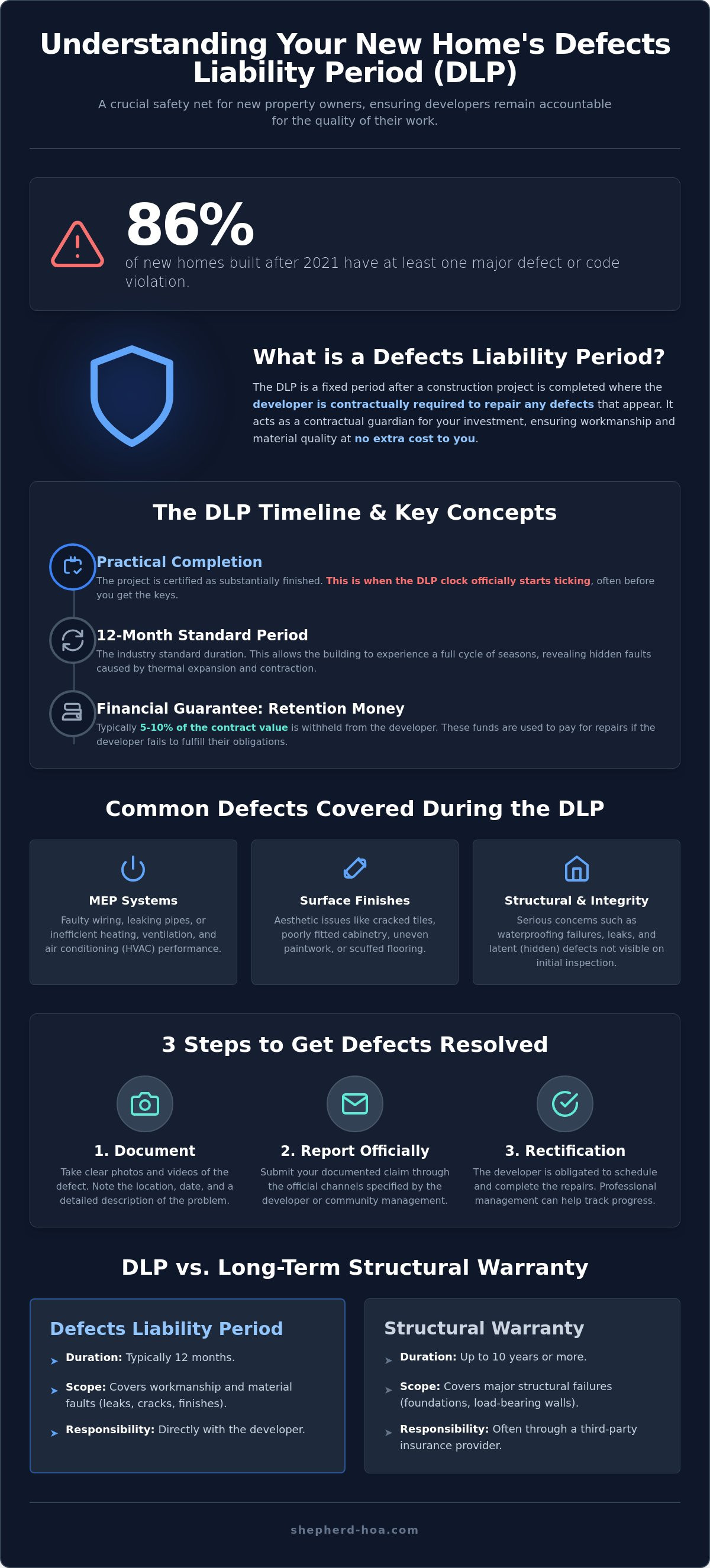
Securing a new property is a significant milestone, but the transition from construction to ownership requires a clear understanding of your protections. A Defects Liability Period is a specific timeframe following the completion of a project during which the developer is contractually obligated to rectify any faults that arise. To put it simply, the DLP is the period where a developer remains contractually bound to repair defects at no cost to the owner. This period acts as a guardian for your investment, ensuring that the finished product meets the high standards promised at the time of purchase.
This phase serves a dual purpose that benefits both parties. For you, the homeowner, it provides a crucial safety net against poor workmanship or faulty materials. For the developer, it offers a window to correct errors and fulfill their obligations without the immediate pressure of litigation. By addressing issues through this structured process, you maintain the long-term stability and value of your asset while avoiding the stress of paying for repairs that shouldn't be your responsibility. Understanding what is a DLP (Defects Liability Period) allows you to move into your new home with a sense of organized control and peace of mind.
Practical Completion vs. Handover
One of the most important dates in your property timeline is "Practical Completion." This is the moment a project is certified as substantially finished and safe for its intended use. It's a common misconception that the liability period begins on the day you receive your keys. In many cases, the clock starts ticking as soon as the regulatory authorities issue the completion certificate. Because this milestone often occurs before the physical handover, you might already be several weeks into your protection period by the time you move in. Being aware of this trigger point is essential so you don't lose valuable time to report issues.
Common Defects Covered During the DLP
During this window, you should be vigilant for various types of faults that can impact your quality of life. These typically fall into several categories:
MEP Systems: Issues with mechanical, electrical, and plumbing systems, such as faulty wiring, leaking pipes, or inefficient HVAC performance.
Surface Finishes: Aesthetic defects including cracked tiling, poorly fitted cabinetry, or uneven paintwork.
Structural and Integrity Issues: This includes more serious concerns like waterproofing failures in balconies or bathrooms and Latent Defects, which are hidden problems that aren't immediately visible during a standard inspection.
Identifying these problems early and reporting them formally ensures that the developer remains accountable. While minor cosmetic issues are common, catching more significant faults during the DLP prevents them from becoming expensive repair bills later in your homeownership journey.
Standard Duration and Scope of Liability
Understanding what is a DLP (Defects Liability Period) requires more than just knowing a definition; you must grasp the specific duration and financial mechanisms that ensure developer compliance. In most residential developments, a 12-month period is the industry standard. This timeframe isn't arbitrary. It allows the building to settle and experience a full cycle of seasonal weather changes. Thermal expansion in the summer and contraction in the winter often reveal faults that aren't apparent during the initial handover. For a deeper legal perspective, you can find Defects Liability Periods Explained in detail through industry legal guides, which outline how these timelines protect both the owner and the contractor.
A critical component of this protection is the concept of "Retention Money." Typically, a percentage of the total contract value, often around 5% or 10%, is withheld from the developer until the liability period expires. This serves as a powerful financial guarantee. If a developer fails to rectify reported faults, these funds can be used to hire a third party to complete the repairs. This system provides you with peace of mind that there's a dedicated budget already set aside for your property's protection. If you're unsure about how these funds are managed in your building, professional community management can provide the oversight needed to clarify these contractual obligations.
Questions often arise regarding what happens when a repair is actually made. If a major component like a central AC compressor is replaced during the eleventh month, the warranty for that specific item usually resets. This ensures you aren't left with a "patched" solution that fails again shortly after the overall period ends. Major system failures or restricted access to the property can also lead to an extension of the liability window, ensuring the developer's duty of care remains intact until the issue is fully resolved.
Latent vs. Patent Defects
Distinguishing between these two types of faults is vital for effective reporting. Patent defects are obvious issues, such as a cracked window or a missing door handle, which should be identified during your initial inspection. In contrast, the liability period is specifically designed to capture latent defects. These are hidden problems, like a slow pipe leak behind a wall or inadequate roof insulation, that only emerge after months of regular use. Because these issues are not immediately visible, the 12-month window is your primary tool for ensuring they are fixed at the developer's expense.
Exclusions: What the DLP Does Not Cover
While the protection is robust, it isn't an all-encompassing insurance policy. The developer is not responsible for damage caused by resident negligence or improper use of facilities. Similarly, normal wear and tear from daily living, such as minor scuffs on floorboards or fading paint in high-traffic areas, is generally excluded. Perhaps most importantly, any unauthorized modifications you make to the unit can void the liability for that specific area. If you renovate a bathroom and a leak occurs later, the developer will likely argue that your changes caused the fault.
The Step-by-Step Process for Reporting Defects
Once you understand what is a DLP (Defects Liability Period), the next phase is taking decisive action to protect your home. Reporting a fault isn't just about sending an email; it's about following a methodical process that leaves no room for developer ambiguity. By maintaining a clear paper trail, you ensure that your requests are prioritized and legally documented. This organized approach replaces the stress of uncertainty with a sense of calm reliability. It positions you as an informed owner who values the long-term stability of your asset.
Effective defect management follows five essential steps:
Step 1: Documentation. As soon as you spot an issue, take clear, high-resolution photographs. Capture the defect from multiple angles and include a wide shot to show its location within the room to provide context for the repair team.
Step 2: Formal Notification. Submit your findings through the developer's official portal or your designated community manager. Avoid informal messages like WhatsApp or casual phone calls, as these rarely hold weight in contractual disputes or during the audit of retention funds.
Step 3: Inspection. The developer will send a representative to verify the claim. Be prepared to point out the specific issues you've documented to ensure the scope of work is fully understood.
Step 4: Verification. Once repairs are finished, don't take them at face value. If the fix involves complex systems like plumbing or electrical work, you may want a professional third party to verify that the repair meets industry standards.
Step 5: Final Sign-off. Only close the report once you're satisfied with the result. Obtain a formal document or digital confirmation stating that the defect has been rectified to your satisfaction.
The Importance of the Snagging Report
A successful liability period begins long before the first leak appears. A professional snagging report serves as your baseline, identifying issues before they escalate into community-wide problems. By using a detailed snagging and inspection checklist, you can catch patent defects during the handover phase. This proactive step ensures that the developer is already aware of the building's condition as the clock starts on the DLP, preventing future disputes over when a defect actually occurred.
Managing Access and Scheduling
While the developer is obligated to fix faults, you have a reciprocal duty to provide reasonable access to your property. Clear communication is the backbone of this relationship. For non-emergency repairs, it's standard to expect a response window of 7 to 14 days. In emergency situations, such as a major burst pipe or total power failure, the response should be immediate. If a developer remains unresponsive after formal notification, your community manager can act as a steady guide to enforce the terms of the contract and protect your interests.
DLP vs. Long-Term Structural Warranties
Homeowners often breathe a sigh of relief once the first year of ownership passes, but your protection doesn't end there. While understanding what is a DLP (Defects Liability Period) is vital for managing immediate repairs like leaky faucets or faulty wiring, you must also recognize the distinction between short-term fixes and long-term structural safety. In jurisdictions like the UAE, the law provides a ten-year warranty against major structural defects, known as decennial liability. This is a much longer and more rigorous commitment than the standard 12-month period we've discussed so far.
RERA (Real Estate Regulatory Agency) provides a robust oversight mechanism to ensure these obligations are met. The strata law framework ensures that even after the initial liability period expires, the developer remains legally accountable for the building's core integrity. Once that first year concludes, the Owners Association typically takes the lead on managing claims related to common areas and structural stability. This transition of responsibility ensures that community interests are protected by a collective body, providing a steady backbone for the group's long-term asset value.
Decennial Liability Explained
Decennial liability is a form of strict liability that lasts for ten years from the date of building completion. It specifically covers any defect that threatens the stability of the structure or results in a total or partial collapse. Unlike the liability period for minor faults, which covers cosmetic issues like peeling paint or loose hinges, decennial liability is strictly for structural concerns. This protection remains valid even if the developer is no longer active or has sold their interest in the project. It's a fundamental pillar of property law designed to give you lasting peace of mind.
Navigating Warranty Claims
Successful long-term claims often depend on the records you keep today. Every repair made during the initial liability period should be documented with precision. Sometimes, a recurring minor leak reported during the first year is actually a symptom of a larger structural flaw that only becomes apparent in year three or four. By maintaining an organized file of all correspondence and repair logs, you provide your community manager with the evidence needed to hold developers accountable later. Before your 12-month window closes, it's wise to conduct a professional audit of the building's health to identify any lingering concerns.
If you're approaching the end of your initial liability window, our team can help you manage the transition and protect your community. Contact us for professional community management services to ensure your asset's value is guarded for the next decade.
How Professional Community Management Safeguards the DLP
While an individual owner focuses on their specific unit, professional community management takes a broader view of the entire building. Understanding what is a DLP (Defects Liability Period) is just as critical for the common areas as it is for your living room. The management team acts as a watchful guardian, coordinating community-wide inspections that identify faults in shared spaces like swimming pools, elevators, and lobbies. By consolidating these issues into a single, professional report, the team ensures the developer cannot overlook systemic problems that might affect every resident.
A primary advantage of this oversight is the management of retention funds. As we discussed, these funds are the ultimate lever for accountability. A professional manager ensures that the release of this money only happens after every single snag is closed to a high standard. They maintain a direct, professional line of communication with the developer, replacing the frustration of unresponsive emails with organized, results-oriented dialogue. This level of expert Owners Association management is indispensable during the complex handover phases where technical and legal details often overlap.
Asset Preservation and Social Harmony
Handling developer negotiations professionally reduces the emotional burden on volunteer board members and residents. When a manager takes the lead, it prevents the depletion of the community's general fund. Developers are held responsible for their own mistakes, ensuring that service charges aren't wasted on repairs that should've been covered under the liability period. This rigorous oversight maintains high property values and fosters a sense of social harmony, as residents see their investment being actively protected. It replaces operational stress with a sense of organized control.
Transitioning from Developer to Homeowner Control
The end of the 12-month period marks a pivotal moment for any community. It requires a comprehensive audit to ensure the building is in peak condition before the developer's short-term obligations expire. Shepherd HomeOwners' Association facilitates this smooth transition by auditing facility management responsibilities and ensuring all technical documentation is handed over correctly. The final sign-off isn't just a formality; it's a declaration that the community is ready for long-term stability under homeowner control. This organized transition ensures your asset remains a source of pride rather than a source of stress.
Protecting Your Investment for the Long Term
Understanding exactly what is a DLP (Defects Liability Period) transforms you from a passive observer into an empowered property owner. You now recognize that the 12-month window following practical completion is your most critical opportunity to hold developers accountable for the quality of their work. By using retention funds as financial leverage and following a structured reporting process, you ensure that faults are corrected without depleting your community's private reserves. Distinguishing between minor cosmetic snags and long-term structural liabilities is the final step in comprehensive asset preservation.
Professional oversight makes this complex transition feel manageable and predictable. Since 2010, Shepherd HomeOwners' Association has provided the expert guidance needed to navigate these technical milestones with ethical governance and transparency. As a RERA approved community management partner, we offer specialized oversight of the Mollak financial system and property handover procedures to maintain your building's integrity. Ensure a seamless property transition with Shepherd HomeOwners' Association handover services to secure your investment's future. You can move forward with confidence, knowing your home is in the hands of a steady, expert guide.
Frequently Asked Questions
Can a Defects Liability Period be extended?
Yes, a Defects Liability Period can be extended under specific circumstances. If a major system like the central cooling fails and requires significant repair late in the window, the warranty for that specific component often resets from the date of the fix. Extensions also occur if the developer fails to provide access or if major systemic issues prevent the full use of the building. This ensures the protection remains fair for the owner.
Who pays for repairs during the DLP?
The developer is financially responsible for all repairs related to construction faults or poor workmanship during this timeframe. Because the contract mandates that the building be delivered to a specific standard, any deviation is the developer's burden. This is why retention money is withheld. It acts as a guarantee that funds are available for rectifications without impacting the community's service charge budget or your personal finances.
What happens if the developer refuses to fix a defect?
If a developer remains unresponsive, your primary recourse is through formal regulatory channels. You should first document the refusal through your community manager to create a clear paper trail. If the issue persists, the Owners Association can utilize the retention funds to hire an independent contractor to finish the work. This ensures the building's integrity isn't compromised by a developer's lack of action or professional negligence.
Does the DLP apply to commercial properties as well?
Yes, the concept of a liability period applies to commercial properties just as it does to residential ones. While the standard 12-month duration is common, the specific terms depend on the commercial contract and the complexity of the building's systems. Understanding what is a DLP (Defects Liability Period) for a commercial unit is essential for business owners to avoid unexpected maintenance costs during their first year of operation.
Is the HVAC system covered under the standard DLP?
The HVAC system is definitely covered under the standard 12-month protection window. As a core mechanical component, any failure in cooling performance or ductwork integrity is considered a defect the developer must fix. It's important to keep all service records during this time. If a major part like a compressor is replaced, ensure you receive documentation that the warranty for that specific part has been extended accordingly.
Can I fix a defect myself and charge the developer?
You shouldn't attempt to fix a defect yourself if you expect the developer to pay for it. The developer has a contractual right to rectify the issue using their own contractors. Performing unauthorized repairs often voids your warranty for that specific area. If you face an emergency, contact the developer's maintenance team immediately. Only proceed with independent repairs if you've received explicit, written approval from the developer first.
What is the role of the Owners Committee during the DLP?
The Owners Committee serves as the collective voice for all residents regarding common area issues. They collaborate with the community manager to audit shared facilities like gyms, pools, and lobbies. Their goal is to ensure that all large-scale defects are resolved before the final handover is signed off. This collective oversight is a vital part of what is a DLP (Defects Liability Period) management strategy for any community.
How does the Mollak system track defect rectifications?
The Mollak system tracks the financial side of the rectification process through the strict oversight of retention funds. By requiring RERA approval for budget and fund releases, the system ensures that developers don't receive their final payments until the community management team confirms all snags are closed. This creates a transparent link between the physical repair of defects and the legal release of the developer's held capital.


Comments