
Avoiding Property Handover Delays: A 2026 Guide to Seamless Transitions

Did you know that under standard RERA-approved agreements, developers typically hold a 12-month tolerance window beyond your stated completion date before you can legally claim a refund? This regulatory reality means that avoiding property handover delays requires more than just monitoring construction progress; it demands a strategic, administrative approach. We know how stressful it's to face vague updates from developers while worrying about the financial impact of a delayed move-in. It often feels like you're navigating a complex maze without a map.
We're here to replace that operational stress with a sense of organized control. This guide outlines the proactive strategies and administrative steps you need to ensure your property transition remains on schedule and compliant with national regulations. You'll gain a clear roadmap for managing the Mollak system, securing RERA approvals, and coordinating utility connections efficiently.
By understanding the nuances of professional snagging and the specific documentation required for 2026, you can protect your assets and move toward key collection with confidence. We'll explore how to manage these bottlenecks to ensure a seamless transition into your new community and the preservation of your property's value.
Table of Contents
Understanding the Root Causes of Property Handover Delays in 2026
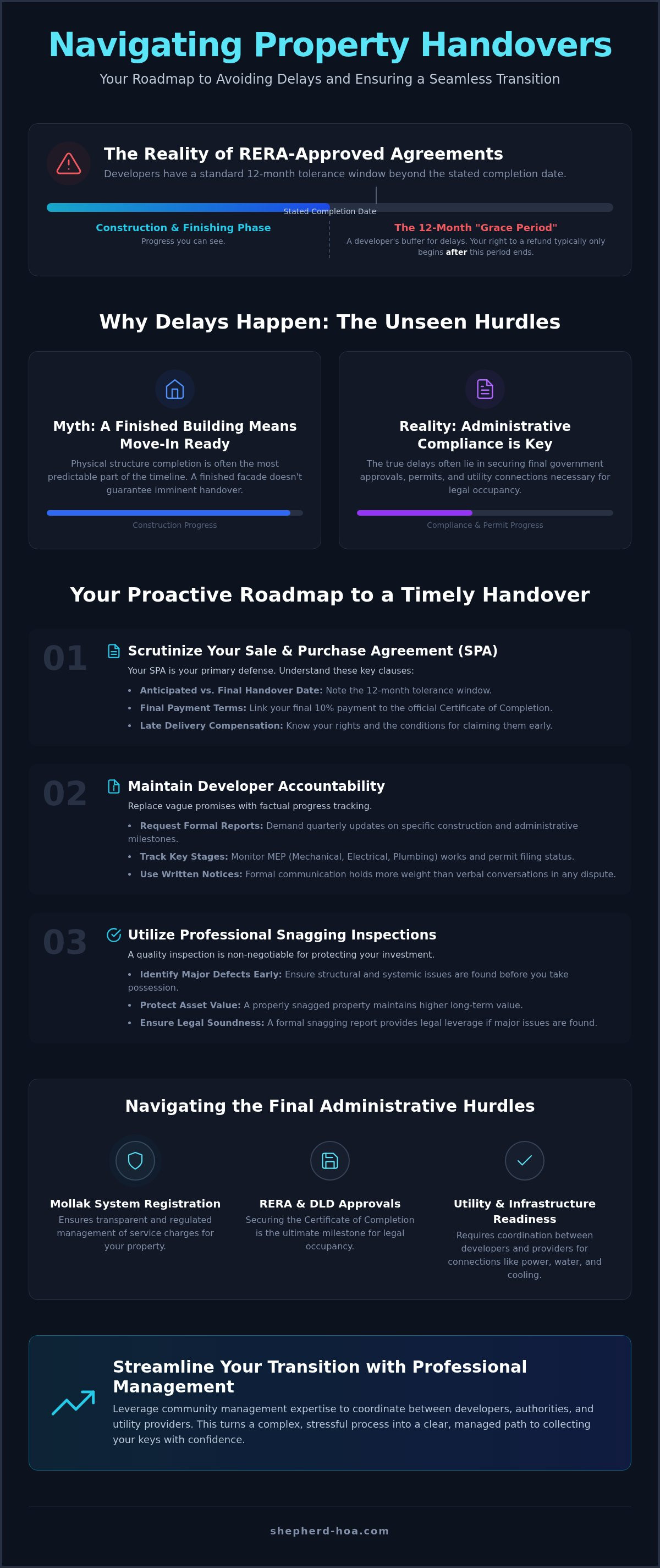
Many owners assume a completed building exterior signals an imminent move-in. However, the physical structure is often the easiest part of the timeline to predict. In the current market, the primary friction points often lie beneath the surface in administrative and regulatory layers. Recognizing these hurdles is the first step toward avoiding property handover delays and managing your occupancy expectations effectively.
Construction vs. Compliance Bottlenecks
A finished unit doesn't equal a livable unit until government entities grant final approvals. These compliance checks ensure the building meets safety, fire, and utility standards. Delays often occur when developers struggle to clear these final inspections or secure the necessary permits for the legal transfer of property. The Certificate of Completion is the primary legal milestone that confirms a building is officially ready for occupancy. Without this document, keys cannot be handed over, regardless of how finished the interior looks.
Community-wide handovers also depend on infrastructure readiness. If the master developer hasn't completed access roads, street lighting, or district cooling connections, the sub-developer cannot legally grant access to individual owners. While construction speed is visible, these invisible bottlenecks are often the true culprits behind missed deadlines. Supply chain disruptions for specialized materials or developer-side financial constraints can also stall progress during these final stages.
The 'Grace Period' Explained
Most Sales and Purchase Agreements (SPAs) include a standard grace period, typically 12 months beyond the initial completion date. This window gives developers a buffer to manage unexpected hurdles without facing legal penalties. It's vital to recognize that your rights to claim a refund or cancel the contract usually only activate after this 12-month period expires. Developers often cite "force majeure" clauses to justify these extensions, referring to events beyond their control like global supply chain shifts or regulatory changes.
You should monitor whether a delay exceeds this industry-standard threshold. If the developer moves past the 12-month window without a clear path to completion, it's often a sign of deeper systemic issues rather than simple administrative friction. Staying informed about these root causes helps you maintain a sense of organized control. It allows you to transition from passive waiting to proactive oversight as you navigate the final steps toward your new home.
Proactive Strategies for Avoiding Property Handover Delays
While many owners focus on legal remedies after a project stalls, the most effective approach to avoiding property handover delays is early, strategic intervention. You must act as an informed guardian of your investment long before the keys are ready for collection. By taking control of the administrative timeline, you can replace uncertainty with a structured path to occupancy.
Reviewing the Sale and Purchase Agreement (SPA)
Your SPA is your primary defense and roadmap. It's essential to distinguish between the "Anticipated Completion Date" and the "Final Handover Date." Most 2026 contracts in the region include a 12-month tolerance window, which means the developer isn't technically in breach until a full year has passed since the original target. You should identify specific clauses governing the final 10% of construction, as these often dictate when your final payment is due relative to the issuance of the Certificate of Completion. Understanding your rights regarding late delivery compensation early on allows you to set clear expectations with the developer's CRM team.
Maintaining Developer Accountability
Don't rely on glossy marketing brochures or generic email blasts for updates. Request formal quarterly progress reports that include specific milestones, such as the completion of MEP (Mechanical, Electrical, and Plumbing) works or the filing status of building permits with local authorities. If a developer remains vague about these technical stages, seeking professional property handover services can help you demand the transparency you deserve. Formal written notices carry significantly more weight in regulatory disputes than verbal promises made over the phone.
Ensuring Financial and Registration Readiness
Administrative bottlenecks often occur on the buyer's side during the final weeks. You can streamline the transition by completing these steps ahead of time:
Verify Registration: Ensure your unit is correctly registered in the interim real estate register. This pre-verification confirms the developer has followed through with the necessary Land Department filings.
Prepare Final Funds: Have your final installment ready, along with the 4% DLD transfer fee and any administrative trustee fees.
Review Service Charges: Budget for initial service charges, which must be approved through the Mollak system. Having these funds accessible prevents delays in receiving your No Objection Certificate (NOC) for the handover.
By maintaining a documented communication trail and verifying your unit's legal status, you move from a position of stress to one of organized control. These proactive steps ensure that when the building is physically ready, your administrative file is already at the front of the queue.
The Critical Role of Professional Snagging and Quality Inspections
Once the administrative path is clear, the focus shifts to the physical state of your investment. Professional snagging is more than a cosmetic walkthrough; it's a vital mechanism for avoiding property handover delays caused by critical unit failures. If a unit has major defects, it's effectively unfinished. This creates a 'de facto' delay even if the developer has issued a notice of completion. Accepting a unit with significant issues can compromise your asset value and lead to costly repairs later.
What to Include in Your Handover Inspection
A comprehensive inspection must go beyond surface-level aesthetics. You need to verify the integrity of structural elements, MEP (Mechanical, Electrical, Plumbing) systems, and overall build quality. Critical failures, such as water leaks, faulty wiring, or HVAC malfunctions, should be prioritized over minor snags like paint chips or cabinet alignments. For a detailed breakdown of what to look for, refer to Your Dubai Property Snagging & Inspection Checklist. This document serves as your guide to ensuring every corner of your property meets the required standards before you sign the final handover form.
The Impact of Rectification on Timelines
The inspection report is your primary tool for accountability. After the snagging is complete, the developer enters a rectification period to address the identified issues. It's essential to set a clear deadline for these repairs to prevent the process from dragging on indefinitely. In some cases, you might choose to accept a unit 'as-is' if the developer provides a legally binding written undertaking to fix minor issues within a specific timeframe after move-in. This strategy can help you avoid further delays while still protecting your rights.
However, you must be cautious. Some developers may use the snagging process as a loophole to mask their own administrative unreadiness. By claiming they're "fixing snags," they might be buying time for pending government approvals. A professional inspection team acts as your guardian in these scenarios. They can distinguish between legitimate repair needs and stalling tactics, ensuring that avoiding property handover delays remains the priority. This expert oversight provides the peace of mind that your home is both safe and officially ready for your arrival.
Navigating Administrative Hurdles: Mollak, RERA, and Utility Readiness
Physical completion is only half the battle. Even if your unit is snag-free, administrative friction can keep your keys out of reach. The final stage of your journey involves navigating specific regulatory systems designed to protect your investment. Mastering these hurdles is the final requirement for avoiding property handover delays and ensuring your community is governed with transparency from day one.
Mollak and Service Charge Transparency
The Mollak system is a critical regulatory framework that monitors service charges in jointly owned properties. You must verify that your developer has obtained RERA-approved service charge budgets through this platform before you make your final payment. If a developer hasn't cleared their Mollak filings, they cannot legally issue a demand for service charges, which can stall the entire handover process for the building. This system acts as a guardian for your financial interests, preventing arbitrary fee increases and ensuring that your money is managed in a dedicated escrow account.
Pending disputes between developers and RERA regarding budget transparency are a frequent cause of last-minute bottlenecks. You should confirm that the service charge rates align with the figures disclosed in your initial agreement. For a deeper look at how these systems impact your ongoing costs, explore our guide on Understanding Mollak Dubai. Ensuring your unit is correctly registered for RERA compliance during this phase is essential for your long-term peace of mind.
Utility Account Setup and Key Collection
You cannot legally occupy your property without active water and electricity connections. In Dubai, this requires a security deposit of AED 2,000 for apartments or AED 4,000 for villas with DEWA. While connection typically occurs within 15 to 18 working hours of payment, documentation errors remain a leading cause of delays. You need a valid Title Deed or Oqood, along with your Emirates ID, to initiate these services. Coordinating the "No Objection Certificate" (NOC) from the developer is the final gatekeeper. This document confirms all your financial obligations, including the NOC fee which can range from AED 500 to AED 5,000, are settled.
Administrative errors in utility registration or missing NOC documentation can push your move-in date back by weeks. You can eliminate this operational stress by utilizing professional property handover support to manage these filings on your behalf. We act as an invisible backbone for owners, handling the technical mechanisms of utility setup and RERA registration so you can focus on the transition. By organizing these administrative steps early, you ensure that the moment the developer releases the keys, your home is fully powered and legally ready for occupancy.
Streamlining the Transition: How Professional Management Prevents Bottlenecks
The final push toward occupancy often reveals a critical gap between the developer's construction exit and the owner's arrival. This transitional phase is where professional community management provides the most significant impact. By engaging an expert partner during the delivery stage, you ensure that the entire building ecosystem is prepared for residents. Avoiding property handover delays at this juncture requires a specialized focus on both individual unit readiness and the operational status of shared infrastructure.
Professional Oversight of the Handover Process
Shepherd HOA acts as a steady, expert guide through the technical mechanisms of project delivery. We manage the formal transition of unit documentation and keys, ensuring that every administrative box is checked before you take possession. Our team audits developer compliance to verify that building-wide systems, from fire safety to elevator certificates, are fully operational. This professional oversight replaces the operational stress of individual owners with a sense of organized control. We function as the guardian of your interests, identifying systemic bottlenecks that could stall the legal transfer of your property.
Our specialized per-unit property handover service provides a transparent, logical way to manage this transition. We coordinate directly with the developer to ensure that snagging repairs are completed and that all RERA-mandated filings are accurate. This proactive stance ensures that your unit doesn't get lost in the shuffle of a large-scale project delivery. By managing the flow of information between the developer and the owner, we prevent the communication breakdowns that often lead to unexpected delays.
Securing Long-Term Asset Value
The first 90 days post-handover are the most critical for establishing community harmony and preserving asset value. During this window, the focus shifts from individual unit ownership to collective community governance. If common areas like gyms, pools, and lobbies aren't ready for use, the overall appeal and value of the property can decline rapidly. We ensure that these shared spaces are inspected and handed over with the same rigour as your private unit.
Transitioning into a well-managed community provides immediate peace of mind. You can learn more about the benefits of structured governance in our guide to Owners Association Management in Dubai. By prioritizing professional oversight from day one, you protect your financial investment and ensure a high standard of living for years to come. This methodical approach to community management is the final step in avoiding property handover delays and securing a seamless transition into your new home.
Taking Control of Your Property Transition
Success in the 2026 real estate market requires a shift from passive waiting to proactive administrative oversight. You've learned that the physical completion of a building is only the first step. True control comes from mastering the Mollak system, conducting professional snagging, and ensuring all RERA-mandated documentation is in order. These steps are the most effective methods for avoiding property handover delays and protecting the long-term value of your asset.
Since 2010, we've acted as a steady guardian for owners navigating the complexities of community governance. Our team provides dedicated per-unit handover and documentation support to ensure you meet every regulatory requirement without unnecessary stress. Ensure a seamless transition with Shepherd's professional property handover services. We specialize in RERA and Mollak compliance to bridge the gap between developer delivery and your first day at home.
Your journey to ownership doesn't have to be a source of frustration. With the right roadmap and expert guidance, you can move into your new community with confidence and peace of mind. Let's ensure your transition is as smooth as the home you've invested in.
Frequently Asked Questions
What is the standard grace period for property handover in the UAE?
The standard grace period is typically 12 months beyond the anticipated completion date stated in your Sale and Purchase Agreement. This window allows developers to manage unforeseen construction or administrative hurdles without being in legal breach. Your rights to seek contract cancellation or refunds usually only trigger after this 12-month period expires and the developer fails to deliver.
Can I refuse to take handover if the property has snags?
You can refuse handover if the property has critical defects that make it unlivable or unsafe, such as major electrical failures or structural issues. However, you cannot legally refuse handover for minor cosmetic snags like paint chips or scuff marks. In these cases, the developer provides a written undertaking to rectify minor issues within a specific timeframe after you receive the keys.
What happens if a developer cancels a project before handover?
If a project is officially canceled, the Dubai Land Department and RERA initiate a liquidation process to protect investors. Funds held in the project's escrow account are used to refund owners. If escrow funds are insufficient, the developer's assets may be liquidated under court supervision to recover your investment. This process ensures a high level of protection for your capital.
How much are the typical fees for property handover management services?
Fees for handover management are typically structured on a per-unit basis. The exact amount depends on the property type and the scope of administrative support required for your specific transition. These specialized fees cover the coordination of documentation, utility setup, and regulatory filings. You should request a tailored quote to understand the costs associated with managing your unit's transition effectively.
Is the Mollak system mandatory for all new property handovers?
Yes, the Mollak system is mandatory for all jointly owned properties in Dubai. It is the official platform through which RERA reviews and approves annual service charge budgets. Without an active Mollak registration and an approved budget, developers cannot legally invoice you for service charges. Ensuring this system is updated is a critical component in avoiding property handover delays.
What documents do I need to prepare for a smooth key collection?
You must prepare your original passport, Emirates ID, and the fully signed Sale and Purchase Agreement. Additionally, you will need the final payment receipt from the developer and proof of your utility registration. Having a valid Title Deed or Oqood is also essential to complete the legal transfer and receive your keys without facing last-minute administrative pushback.
Can I claim compensation if my property handover is delayed by more than a year?
Compensation eligibility depends entirely on the specific late-delivery clauses within your signed agreement. Most contracts only allow for financial claims after the 12-month grace period has passed. If the developer fails to deliver after this window, you may be entitled to penalties or the right to terminate the contract, provided you have maintained a documented communication trail throughout the process.
How do I set up my utility accounts before moving in?
You can set up your DEWA account online or through their smart app using your Title Deed or Oqood number. You will need to pay a refundable security deposit of AED 2,000 for apartments or AED 4,000 for villas. Supply is usually connected within 15 to 18 working hours after the activation fees and security deposit are settled, which is a vital step in avoiding property handover delays.


Comments