

Mastering Property Handover in Dubai: The Complete 2026 Homeowner’s Guide
- Sohrab Virani

- Mar 14
- 14 min read
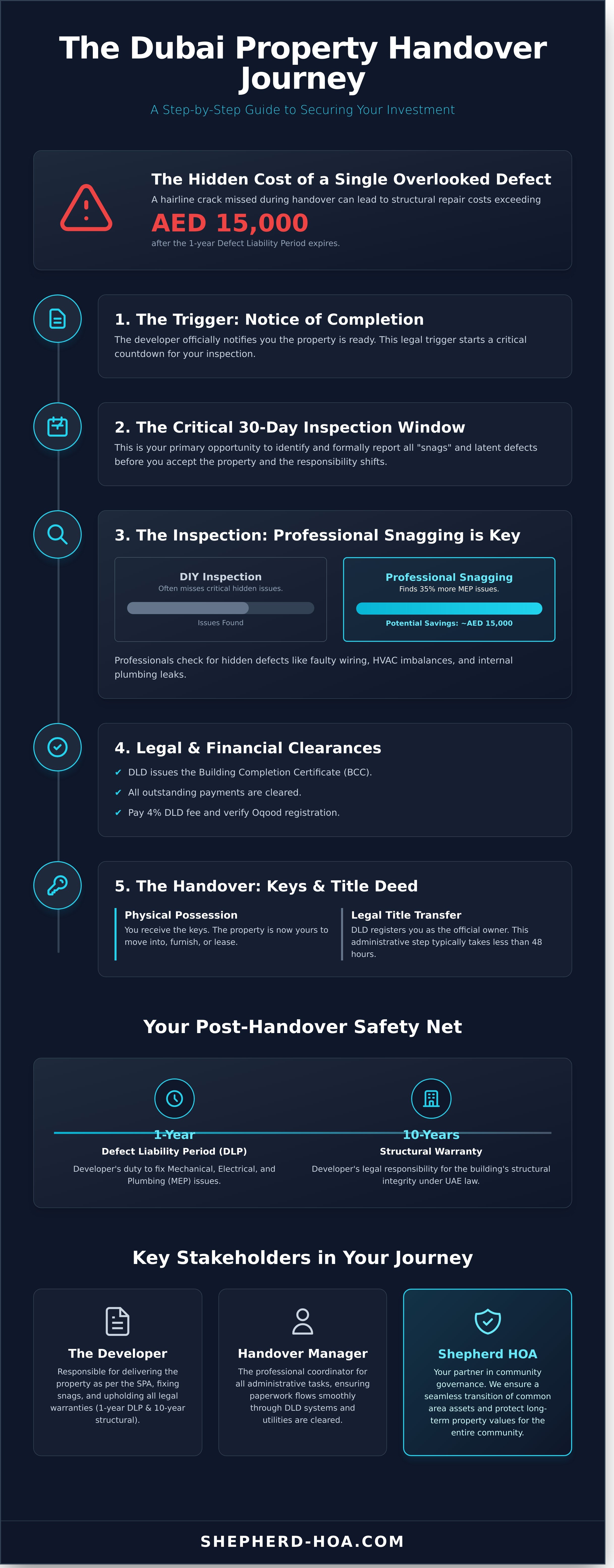
A single overlooked hairline crack in a new Dubai villa can result in structural repair costs exceeding AED 15,000 once the one-year Defect Liability Period expires. You've spent years watching your investment rise from the sand. It's natural to feel a mix of excitement and anxiety as the completion date approaches. The final property handover dubai involves more than just collecting keys. It's a critical legal transition that finalizes your acceptance of the builder's work.
We understand that the shift from investor to active homeowner can feel overwhelming when dealing with RERA compliance and Mollak registration. You deserve a transition that's as seamless as the lifestyle you've purchased. This guide provides the expert oversight you need to identify hidden construction defects, activate DEWA and Empower services without delays, and understand your role within the community. We'll break down the 2026 snagging protocols and service charge transparency standards to ensure your investment remains protected. Peace of mind starts with a structured plan.
Key Takeaways
Protect your investment by understanding the critical 30-day window for identifying latent defects during the legal transfer of ownership.
Ensure long-term structural integrity by utilizing professional snagging services and understanding your rights under the 10-year structural warranty.
Navigate the property handover dubai process with a clear, step-by-step checklist that covers everything from RERA compliance to final clearances.
Defend against common developer delays and "Force Majeure" traps with expert guidance on valid excuses and legal protections in 2026.
Secure the value of your entire neighborhood by learning how to audit common area assets during the transition into a managed community.
Table of Contents
What is Property Handover in Dubai and Why Does it Matter?
The Technical Milestones: Snagging, Inspections, and Clearances
Common Pitfalls and How to Avoid Handover Delays
Your Property Handover Checklist: A Step-by-Step Guide
Beyond the Keys: Transitioning into Community Living with Shepherd
What is Property Handover in Dubai and Why Does it Matter?
Property handover in Dubai serves as the final bridge between a paper contract and physical reality. It's the formal process in which the developer transfers the keys and responsibility for the unit to you. In 2026, with Dubai's real estate market projected to deliver over 45,000 new units across master communities like Dubai South and Tilal Al Ghaf, understanding this transition is vital. You aren't just getting keys; you're inheriting a set of legal and financial obligations that require a steady, expert hand to manage.
The first 30 days after you receive the keys are the most critical for any new homeowner. This window is your primary opportunity to identify latent defects. These are hidden issues like faulty wiring, HVAC imbalances, or internal plumbing leaks that weren't visible during the initial walkthrough. If you miss these during the first month, the cost of repair often falls to you once the initial maintenance period expires. A successful property handover ensures your investment remains a high-value asset rather than a source of unexpected expenses.
It's vital to distinguish between physical possession and the transfer of legal title. Physical possession happens when you get the keys and can move in or lease the unit. Legal title transfer is a separate administrative step where the Dubai Land Department (DLD) registers you as the owner in the official registry. You'll typically pay the 4% DLD fee at this stage if it hasn't already been settled. By 2026, the DLD will have streamlined this process to take less than 48 hours for most standard transactions, ensuring you can exercise your rights as an owner almost immediately.
The Legal Framework: RERA and the Dubai Land Department
The legal framework in the UAE serves as the bedrock of your rights as a homeowner. Law No. (6) of 2019 is the specific piece of legislation that protects you, particularly regarding the management of common areas and the responsibilities of the developer. Before any property handover in Dubai can officially conclude, the DLD must issue a Building Completion Certificate (BCC). This document confirms the structure is fit for habitation. Your Sale and Purchase Agreement (SPA) is the definitive map for this journey; it outlines the exact finishes, dimensions, and amenities you've paid for. If the reality doesn't match the SPA, you have the legal right to demand rectification before taking possession.
Key Stakeholders in Your Handover Journey
The Developer: They hold the duty of care to fix "snags" or minor defects for at least 12 months after handover. They also provide a 10-year structural guarantee under UAE law.
The Handover Manager: This professional coordinates the administrative flow, moving your paperwork through the DLD systems and ensuring utility clearances are in place.
Shepherd HOA: We act as your future partner in community governance. Our role is to replace the stress of community management with organized control. We ensure that the transition of the building’s assets into the hands of the homeowners' association is seamless, protecting property values from day one.
In the high-volume environment of 2026, where thousands of owners are entering the market simultaneously, having an authoritative guide is no longer a luxury; it's a necessity. We function as a watchful guardian, ensuring that the community harmony you bought into is preserved through transparent oversight and professional guidance.
The Technical Milestones: Snagging, Inspections, and Clearances
The property handover journey reaches its most critical phase when the developer issues the "Notice of Completion." This isn't just a notification; it's a legal trigger that opens a precise 30-day window for your final inspection. You've got a limited time to document every flaw before the developer officially hands over the keys. While it's tempting to walk through the unit yourself, DIY inspections are risky. Data from 2025 indicates that professional snagging companies identify 35% more MEP issues than homeowners, potentially saving owners an average of AED 15,000 in immediate post-handover repairs.
Your protection doesn't end at the doorstep. The Defects Liability Period (DLP) acts as a one-year safety net for mechanical, electrical, and plumbing issues. Beyond this, the developer remains legally responsible for the building's structural integrity for 10 years under UAE law. Navigating these timelines requires a methodical approach to documentation. Before the final title deed is issued, you'll need to clear all outstanding payments and verify your Oqood registration with the Dubai Land Department (DLD). This ensures your ownership is recorded in the official government registry, providing the ultimate legal security for your asset.
Critical Areas for Snagging Inspections
Professional inspectors focus on the "bones" of the property. They test the MEP systems by checking circuit load capacities and ensuring every drain has the correct slope to prevent blockages. In 2026, thermal imaging has become the industry benchmark. This non-invasive technology identifies moisture behind walls or in gaps in AC ductwork that can lead to energy waste. Identifying a hidden leak now prevents the structural degradation that often surfaces two years later. Finishing and aesthetics, such as tile lippage or cabinet alignment, are also scrutinized to ensure the property meets the high-end specifications promised in your Sale and Purchase Agreement.
Financial Clearances and the Mollak System
You can't take possession without a zero-balance Statement of Account (SOA). This document outlines your final installment schedule and any adjustments based on the unit's actual area. If the final survey shows the unit is 2% larger than the initial plan, you might owe an additional amount based on the original price per square foot. Conversely, if it's smaller, you're entitled to a credit. You must also check that your service charges are registered in the Mollak system. This RERA-governed platform ensures that every dirham you pay toward community maintenance is audited and approved.
Transitioning from an "Estimated" to an "Actual" budget is a common point of friction during the first year of occupancy. Developers often set initial estimates low to attract buyers, but the actual costs of security, landscaping, and pool maintenance can be higher. Ensuring organized administrative oversight during this transition helps you avoid unexpected spikes in fees. This transparency is the backbone of a healthy homeowners association and protects your property's long-term resale value. Once the SOA is settled and the Mollak registration is confirmed, you're ready to collect your keys and begin your life as a Dubai homeowner.
Common Pitfalls and How to Avoid Handover Delays
The transition from "investor" to "homeowner" often brings with it a specific anxiety: the missed completion date. In the current market, a 12-month grace period is standard in most Sales and Purchase Agreements (SPA). If your developer exceeds this window without a valid legal reason, your role as a watchful guardian of your investment begins. You aren't helpless when dates slip. Dubai Law No. 13 of 2008 protects buyers, and by 2026, RERA regulations will have become even more stringent regarding project timelines. If a delay occurs, your first step is to send a formal "Notice of Default" via registered mail or to a Notary Public. This creates the essential legal paper trail required if the matter escalates to the Rental Dispute Center (RDC).
Developers frequently cite "Force Majeure" to excuse delays, but you should scrutinize these claims carefully. While the historic 2024 floods were a valid "Act of God," simple logistical mismanagement or 10% fluctuations in material costs don't qualify as unforeseeable events in 2026. If the developer fails to provide a revised, RERA-approved completion certificate, they may owe you compensation. This usually equates to a percentage of the property value or the equivalent of projected rental income. Always verify that the building has met all Dubai Municipality handover regulations before you agree to any final walkthrough, as these rules ensure the structure is actually fit for habitation.
Quality oversight is your best defense against the "Quick-Fix" trap. During a property handover, developers are often under immense pressure to clear backlogs. This leads to cosmetic "band-aid" repairs, such as painting over damp spots or using silicone to hide structural gaps. Don't accept a unit that hasn't been properly rectified. Under Law No. 6 of 2019, developers are responsible for a one-year defects liability period and a 10-year structural warranty. However, catching major issues before you take the keys is far easier than chasing a contractor once the building management has transitioned to an Owners Association.
Managing Expectations with Developers
Maintain a methodical log of every interaction. If a developer promises a fix by a certain date, get it in writing. Never sign the "Final Snagging Sign-off" until every major item on your report is resolved. If delays persist beyond the 12-month grace period, you can negotiate for waived service charges for the first year as a form of out-of-court compensation. This proactive stance ensures a seamless transition and protects your asset's value from day one.
Utility Setup: DEWA, Empower, and Gas Connections
A successful property handover in Dubai requires coordinated utility activation to avoid a "No Power" move-in day. You must apply for your DEWA (Dubai Electricity and Water Authority) account as soon as you receive your Oqood or Title Deed. Expect to pay a security deposit of AED 2,000 for apartments or AED 4,000 for villas. If your community uses district cooling, you'll need a separate registration with providers like Empower or Emicool, which often requires an additional deposit of approximately AED 2,000. For gas, most modern towers require a connection through a central provider like Lootah Gas; ensure this is scheduled at least 72 hours before your move-in date to ensure your kitchen is fully functional.
Your Property Handover Checklist: A Step-by-Step Guide
The final phase of your property handover in Dubai requires precision and a methodical approach to protect your investment. This isn't just an administrative formality; it's the moment where legal liability shifts from the developer to you. Follow these five steps to ensure a seamless transition into your new home.
Step 1: Verify the Completion Notice. Once your developer issues the official notice, your first task is to verify the project's status through the Dubai Land Department (DLD) REST app. Confirm that the building has received its Building Completion Certificate (BCC). In 2024, approximately 15% of handover delays occurred because owners began the process before the developer secured final municipality clearances. Don't commit to a date until the DLD status shows 100% completion.
Step 2: Professional Snagging. You shouldn't conduct the inspection alone. Appoint a certified snagging company to identify latent defects that an untrained eye will miss. A professional inspection for a standard two-bedroom apartment typically costs between AED 1,800 and AED 2,500. This investment often identifies thousands of dirhams in necessary repairs, from HVAC imbalances to pressurized plumbing leaks, before they become your financial burden.
Step 3: Rectification Management. Submit the detailed snagging report to the developer immediately. Under standard UAE contracts, developers usually require 14 to 21 days to rectify identified issues. Don't sign the final handover document if major "Category A" snags, such as structural cracks or electrical hazards, remain unresolved. Your goal is to ensure the unit meets the exact specifications promised in your Sale and Purchase Agreement (SPA).
Step 4: Financial Settlements and NOC. Clear all remaining balances, including the final installment of the purchase price and any prepayments for service charges. You'll need to pay the 4% DLD registration fee if you haven't already. Once funds clear, the developer issues a No Objection Certificate (NOC). This document is the golden ticket that allows you to take legal possession of the unit.
Step 5: The Handover Packet. The final inspection is your last walkthrough. If the snags are fixed, you'll receive your "Handover Packet." This includes your keys, access cards for community amenities, and a collection of warranty cards for appliances. Ensure you receive a copy of the stamped handover form, as you'll need this for utility registrations.
The Essential Document Checklist
Keep your paperwork organized in a single digital and physical file. You'll need your original SPA, valid Passport copies, and Emirates ID. Ensure you have the Oqood certificate, which serves as your interim registration, and all receipts for payments made to the developer. You must also secure the Homeowner Manual, which contains vital maintenance schedules and appliance warranties that protect your long-term property value.
After the Keys: The First 48 Hours
Security and administrative setup are your immediate priorities. First, change your door locks. While developers provide keys, multiple contractors have had access to your unit during construction. Expect to pay AED 100 to AED 500 for a high-quality lock replacement. Next, register with the community management office. At Shepherd HOA, we streamline this process to ensure your move-in permits and gate passes are issued within 24 hours, preventing any frustration with community security on moving day.
Protect your new investment with professional oversight and transparent community governance. [Discover how Shepherd HOA simplifies community management for Dubai homeowners.](https://shepherd-hoa.com)
Beyond the Keys: Transitioning into Community Living with Shepherd
Receiving your keys marks a significant milestone, but it's only the start of your journey as a homeowner. While your individual property handover in Dubai ensures your specific apartment is snag-free, the common areas represent approximately 40% of your total asset value. If the building's chillers, elevators, or fire safety systems aren't handed over correctly to the Owners Association, you'll eventually face the bill. Shepherd HOA acts as your guardian during this critical phase. We audit developer-provided assets to ensure they meet the exact specifications promised in your Sales and Purchase Agreement. Our team identifies latent defects in shared infrastructure before they become a financial burden for you.
Joining the Owners Committee gives you a direct seat at the table. Under Dubai Law No. 6 of 2019, these committees provide essential oversight of the community's management and financial health. We simplify this process for you. Shepherd facilitates committee meetings and turns complex regulatory requirements into clear, actionable steps. This collaborative approach ensures that the community evolves according to the residents' needs rather than the developer's convenience. We provide the technical expertise so you can focus on your neighborhood's vision.
Professional community management is the most effective way to preserve your property's resale value. In the 2026 Dubai market, buyers prioritize well-maintained buildings with healthy reserve funds. A poorly managed tower can see its market value drop by 15% compared to a Shepherd-managed property in the same district. We treat your community as a premium asset that requires constant, expert oversight to thrive in Dubai's competitive real estate landscape.
The Shepherd Approach to Community Governance
Our management philosophy centers on absolute transparency. We utilize the Dubai Land Department’s Mollak system to track every dirham of your service charges, ensuring no funds are misallocated. We conduct ethical, independent tendering for all facility management (FM) contracts to prevent inflated costs. By auditing these contracts, we've helped Dubai communities reduce their annual service charges by an average of 12% while actually improving the quality of on-site staff. Fiduciary duty is the legal and ethical obligation of a community manager to act solely in the best interest of the homeowners and the association's financial health.
Protecting Your Investment Long-Term
Reactive repairs are a financial trap; they typically cost three times as much as disciplined preventive maintenance. We implement rigorous life-cycle costing for all community assets, from the lobby's marble flooring to the rooftop swimming pool's filtration system. This methodical care ensures that your property handover experience leads to years of stability rather than unexpected special levies. We also draft and enforce clear community rules to ensure harmony among residents, which keeps tenant turnover low and rental yields high. You can learn more about our specific strategies on our Owners Association Management in Dubai pillar page. Our goal is to provide a seamless living experience where the technical complexities of building management remain entirely invisible to you.
Secure Your Dubai Investment with Confidence
Navigating a property handover in Dubai doesn't have to be stressful. By focusing on detailed snagging reports and meeting RERA-mandated clearance deadlines, you protect your financial interests from day one. Successful handover is more than just receiving a set of keys; it's the start of your journey as a stakeholder in a thriving community. Since 2010, Shepherd HOA has acted as a steady guide for homeowners navigating these complex transitions. We've managed over 5,000 units across the city, ensuring every technical milestone meets the highest standards of compliance. As RERA-approved community management experts, we provide the oversight needed to preserve your property's value while fostering long-term harmony. You've worked hard to secure your piece of the Dubai skyline. Our team handles the administrative burden and technical inspections so you can enjoy the results of your investment without the typical delays or headaches. It's time to transition from a buyer to a confident homeowner with a partner who understands the local landscape.
Frequently Asked Questions
How long does the property handover process typically take in Dubai?
A standard property handover in Dubai takes 10 to 45 days from the moment you receive the official notice of completion. This window allows you to finalize your final installment payments, clear your DLD registration, and conduct a thorough walkthrough. Developers usually provide a 30-day grace period for you to settle outstanding balances. If you don't meet these deadlines, you might face late payment penalties or delays in receiving your keys.
Can I refuse to take handover if the snags are not fixed?
You can delay the final signature if the property has major structural defects that make it uninhabitable or unsafe. However, you can't legally refuse handover for minor cosmetic issues like paint scuffs, dusty surfaces, or scratched cabinet handles. These smaller items are recorded on a snag list and must be rectified by the developer under the mandatory one-year defect liability period required by RERA Law No. (6) of 2019.
What are the typical costs associated with property handover in 2026?
Budget approximately 5% to 7% of your property's purchase price for essential closing costs. This includes the 4% Dubai Land Department registration fee and a Title Deed issuance fee of AED 580. You'll also need AED 2,130 for a DEWA deposit for apartments or AED 4,130 for villas. Additionally, developers typically require three to six months of service charges paid in advance to ensure community stability.
Is it mandatory to use the Mollak system for service charges?
Yes, every service charge invoice in a Dubai freehold area must be issued through the RERA-regulated Mollak system. This platform ensures your community funds are managed with total transparency and prevents developers from overcharging for maintenance. It's a critical protection for your investment; don't pay service fees directly to a developer's bank account without a Mollak-approved invoice and a unique 9-digit reference number.
What happens if I am outside the UAE during the handover date?
You can complete the property handover in Dubai process by appointing a legal representative through a Power of Attorney (POA). This document must be notarized and attested by the UAE Ministry of Foreign Affairs to be recognized by developers and the DLD. Your representative can then attend the final inspection, sign the completion documents, and collect your keys on your behalf. This ensures your transition into the community remains seamless and stress-free.
Does the developer pay for DEWA registration during handover?
You are responsible for all utility connection costs and security deposits once the completion certificate is issued. You'll pay a refundable deposit of AED 2,000 for an apartment or AED 4,000 for a villa, plus a connection fee of AED 130 and an additional AED 100 for Knowledge and Innovation fees. These payments must be cleared before the developer can hand over the keys and activate your cooling services for the first time.
How do I verify if my community management company is RERA-approved?
Access the Dubai REST app to instantly verify the registration status of any management firm by searching for their license number. Every licensed company must display its RERA permit on official communications and contracts. We act as a steady guide for boards, ensuring that every administrative action follows these strict RERA guidelines. This oversight is essential to maintain community harmony and protect your property’s long-term market value.
What is the difference between snagging and a home inspection?
Snagging focuses on cosmetic finishing and minor surface defects, while a full home inspection analyzes the property's structural, plumbing, and mechanical integrity. A snag list identifies paint drips or loose hinges; a professional inspection uses thermal imaging to find hidden leaks or electrical faults. Investing in a professional inspection during your property handover in Dubai ensures you aren't inheriting expensive, invisible repair bills that could impact your peace of mind later.


Comments