
Dealing with Difficult Residents in an HOA: A 2026 Guide to Community Harmony
- Sohrab Virani

- 7 days ago
- 13 min read
Updated: 2 days ago
Imagine it is a quiet evening in your community, yet you are dreading the upcoming board meeting because one homeowner consistently turns every discussion into a personal confrontation. You aren't alone. In the rapidly growing residential landscapes of the UAE, the emotional toll of dealing with difficult residents in an hoa is a common burden for volunteer leaders. It is exhausting to balance your duty of care with the stress of collecting service charges or the fear of legal repercussions from disgruntled owners. You want to protect the neighborhood you love, but constant friction makes the role feel more like a battle than a service.
We understand that your primary goal is to maintain a peaceful environment where property values thrive. This guide provides professional strategies to de-escalate high-pressure situations while maintaining strict regulatory compliance. You will learn how to replace operational stress with organized control, ensuring your enforcement remains consistent and legally sound. We will explore how a structured approach to conflict preserves both social harmony and property asset values, positioning your board as a steady guardian of the community's collective interest.
Key Takeaways
Learn to identify the underlying triggers of resident frustration so you can address legitimate grievances without being sidelined by disruptive behavior.
Adopt a professional "Guardian" stance when dealing with difficult residents in an hoa to de-escalate tension and maintain objective, results-oriented communication.
Use your governing documents as the definitive source of truth to ensure all enforcement actions remain consistent, transparent, and legally protected.
Establish proactive governance tools, including standardized complaint forms, to prevent minor issues from escalating into community-wide disputes.
Explore how professional management acts as a neutral backbone for the community, handling service charge collection while you focus on long-term stability.
Table of Contents
Understanding the Root Causes of Resident Conflict
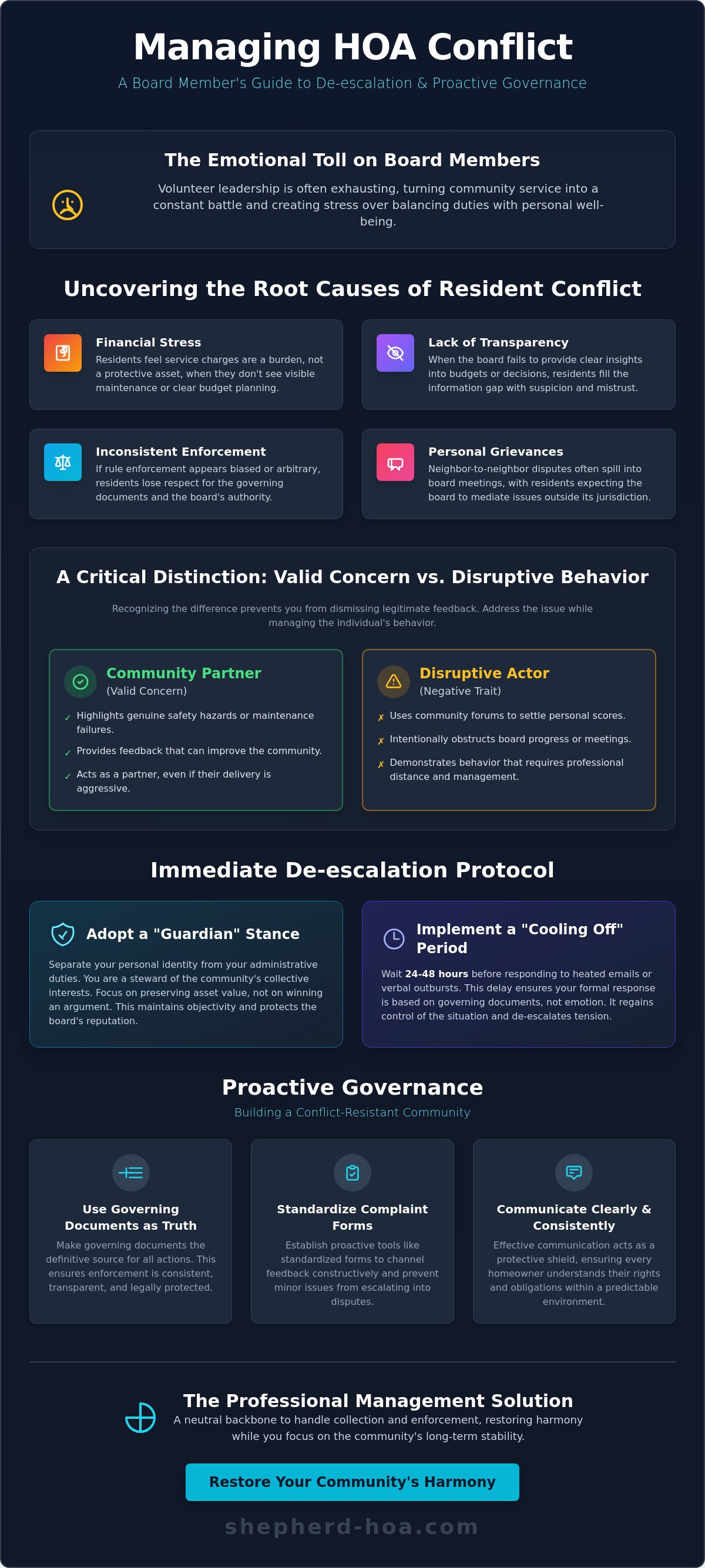
Conflict does not emerge without a reason. In the high-value real estate landscape of the UAE, it is usually the byproduct of deep-seated anxieties regarding property value and personal space. When you are dealing with difficult residents in an hoa, you must look past the immediate behavior to identify the underlying cause. Most residents act out because they feel their largest financial asset is being mismanaged or their personal voice is being silenced by an administrative machine. Understanding these triggers allows you to move from a reactive defensive posture to a proactive guardian role, ensuring the community remains a place of stability and growth.
Distinguishing between a valid concern and a disruptive personality trait is essential for maintaining your sanity as a board member. A resident who consistently highlights a safety hazard or a maintenance failure is actually acting as a community partner, even if their delivery is aggressive. On the other hand, a resident who uses community forums to settle personal scores or intentionally obstructs progress is demonstrating disruptive traits that require a different management approach. Recognizing this difference prevents you from dismissing legitimate feedback that could actually improve the community. It allows the board to address the issue while managing the individual's behavior with professional distance.
Financial stress is perhaps the most common catalyst for community friction. Service charge collection represents a recurring personal expense for every homeowner. If residents do not see the direct benefit of these payments through visible maintenance or clear budget planning, their frustration often manifests as anger toward the board. In a market where community excellence is expected, the pressure on boards to justify every dirham spent is high. When residents feel the association is a financial burden rather than a protective asset, their behavior shifts from cooperative to combative, often leading to public disputes that can affect the community's reputation.
Common Triggers in Community Living
Transparency is the foundation of social harmony. When board members fail to provide clear insights into budget planning or fund allocation, residents often fill that information gap with suspicion. Misunderstandings regarding homeowner duties also create friction. To understand the foundational powers and common issues of these groups, it is helpful to review What is a Homeowner Association? and how its structure influences local governance. Personal grievances between neighbors also frequently spill over into board meetings when residents expect the board to act as a mediator for private disputes that fall outside of the governing documents.
The Link Between Governance and Behavior
Administrative gaps often invite the very pushback that boards find most challenging. If rule enforcement appears inconsistent or biased, residents lose respect for the governing documents entirely. Consistent oversight creates a sense of fairness that settles most disputes before they can escalate into personal attacks. Clear communication acts as a protective shield for the board, ensuring that every homeowner understands their specific rights and obligations. Effective oversight reduces the frequency of dealing with difficult residents in an hoa by establishing a predictable environment where everyone knows the rules of engagement. A difficult resident is often a symptom of governance gaps rather than an inherently malicious actor.
Immediate De-escalation Techniques for Board Members
When you are dealing with difficult residents in an hoa, the immediate priority is to lower the emotional temperature of the interaction. Adopting a professional "Guardian" stance helps you separate your personal identity from your administrative duties. You aren't a target for personal attacks; you are a steward of the community's collective interests. This mindset shift allows you to remain objective, even when a resident's behavior becomes confrontational. By focusing on the preservation of asset value rather than winning an argument, you maintain the high ground and protect the board's reputation from the fallout of emotional exchanges.
Implementing a mandatory "Cooling Off" period is a powerful way to regain control over a spiraling situation. Rather than responding to a heated email or verbal outburst immediately, wait 24 to 48 hours. This delay ensures that your formal response is based on the governing documents rather than a reactive impulse. During face-to-face interactions, practice active listening to validate the resident's perspective without conceding your position. Often, a resident just wants to feel heard. Once they have vented their frustration, you can steer the conversation back to the facts. Always document every interaction, as detailed records are essential for administrative compliance and provide a protective shield if the dispute escalates further.
The 4-Step De-escalation Framework
Step 1: Active Listening. Acknowledge the resident's core concern by paraphrasing it back to them. This demonstrates that you've understood the issue, even if you disagree with their stance.
Step 2: Reaffirm Duty of Care. Remind the resident that the board's primary goal is social harmony and the protection of everyone's property values.
Step 3: Redirect to Rules. Use the established community rules as the neutral "source of truth." This removes personal bias from the enforcement process.
Step 4: Schedule Follow-up. Prevent circular arguments by scheduling a formal follow-up. This moves the discussion from an emotional encounter to a structured administrative process.
Communication Guardrails in High-Stress Situations
Language choice matters in the heat of a dispute. Avoid using "you" language, which can feel accusatory and defensive. Instead, focus on "the community" and what the governing documents require. This keeps the focus on shared standards rather than individual failings. Written communication should always be your default for formal matters. Verbal promises made in high-stress moments can lead to misunderstandings or legal liability. If managing these complex social dynamics is draining your board's energy, professional community management through Shepherd HomeOwners' Association can serve as a neutral third party to handle these interactions with expert precision. During formal meetings, stay firm on time limits for resident comments. This structure prevents any single individual from derailing the collective agenda.
Navigating Disputes Through National Regulatory Frameworks
Personal feelings shouldn't dictate how you manage a community. When you're dealing with difficult residents in an hoa, the national regulatory framework acts as your most reliable neutral arbiter. It shifts the dynamic from a personal confrontation to a matter of legal compliance. National strata laws provide the boundaries for board authority, ensuring that every decision is backed by a recognized legal standard rather than an individual's whim. This structure protects you from claims of bias and gives disgruntled owners a clear, objective reason for enforcement actions.
Your governing documents are the definitive source of truth in any dispute. These records outline the specific rights and obligations of every homeowner, serving as a contract that everyone agreed to upon purchase. Leveraging these documents allows the board to step out of the line of fire. Instead of defending your personal opinion, you're simply upholding the community's established standards. Understanding the legal limits of your authority is just as vital. Boards that overstep their mandate risk legal repercussions and further resident pushback, so staying within the lines of national law is a protective measure for your community's long-term stability.
In addition to managing internal disputes, boards should consider the broader legal protections for their community's brand and identity; to explore these options, you can check out Gulf Legal Advisors.
Leveraging Regulatory Compliance for Service Charges
Financial transparency is the most effective tool for silencing complaints about service charges. Utilizing national compliance systems like Mollak provides residents with a clear, government-audited view of where their money goes. This oversight eliminates the suspicion that often fuels "difficult" behavior. When residents can see that budgets are approved and funds are allocated correctly, their grounds for objection disappear. For many boards, understanding service charge compliance is the best way to handle financial objections before they escalate into personal attacks. Consistent, transparent reporting builds the trust necessary for social harmony and ensures that service charge collection remains a routine administrative task rather than a source of conflict.
Formal Dispute Resolution Pathways
There are times when internal de-escalation isn't enough. If a resident remains non-compliant despite your best efforts, you must know when to involve national authorities like RERA. These bodies provide a formal pathway for resolution that removes the burden from the volunteer board. Securing government approvals for major community decisions further reinforces your position, as it proves the board is acting in accordance with national standards. The Governing Documents serve as the legal backbone of community harmony by defining the rights and responsibilities of every member. By following these established pathways, you ensure that dealing with difficult residents in an hoa remains a manageable process that prioritizes the preservation of the community's asset value and collective peace.
Proactive Governance: Pre-empting Conflict Before it Starts
Proactive governance is about building a framework where conflict has no room to grow. When you're dealing with difficult residents in an hoa, you often find that the friction started with a lack of clarity or a perceived lack of fairness. Establishing a Board Code of Conduct is your first step toward building a high-trust environment. This document ensures every board member acts ethically and stays focused on the community's asset value. It removes the perception of personal agendas, which is a primary trigger for resident pushback. When the board behaves with visible integrity, it sets a standard for the entire neighborhood.
Standardize how you receive and process feedback. A formal Complaint Policy and a structured owner feedback form transform emotional outbursts into actionable data. This process encourages residents to be specific about their grievances rather than venting general frustrations during a meeting. Ethical tendering for third-party services also plays a critical role in building trust. When residents see that vendors are chosen through a transparent, competitive process, it reinforces the board's role as a watchful guardian of collective funds. This transparency replaces operational stress with a sense of organized control for everyone involved.
Transparency as a Shield
Regular communication is the best defense against suspicion. Quarterly progress reports show homeowners exactly what has been achieved with their service charges, from landscape improvements to structural maintenance. Educating residents on the realities of living in a community and the nuances of shared governance helps align expectations from day one. Use professional budget planning tools to demonstrate how current spending preserves long-term asset value. This visibility ensures that homeowners feel like partners in the community's success rather than just bill-payers.
Setting Community Ground Rules
Boundaries provide peace of mind. Clearly define the rules for common area usage and establish pathways for resolving neighbor disputes before they reach the board level. The Owners Committee should represent diverse views, acting as a vital bridge between the administrative board and the wider community. Every resident must understand their specific rights and duties under national law to prevent rule-breaking born of simple ignorance. If your board needs support in establishing these protective frameworks, our community management services provide the expert guidance needed to build a stable foundation for social harmony.
The Professional Management Solution: Restoring Community Harmony
Volunteer board members shouldn't have to sacrifice their personal peace for community service. When you're dealing with difficult residents in an hoa, the emotional toll can be overwhelming; outsourcing the heavy lifting allows you to reclaim your peace of mind. The most effective way to resolve persistent conflict is to introduce a professional buffer that operates with calm reliability. Professional managers act as the invisible backbone of the community, handling the complex administrative tasks that often trigger resident pushback. By positioning an expert management firm as a neutral third party, you remove the personal friction that occurs when neighbors enforce rules against neighbors.
Outsourcing your service charge collection and compliance reporting is a strategic move that protects the board from financial accusations. When a professional entity handles the money, the "difficult" label often disappears because the resident is no longer fighting a person; they're interacting with a standard business process. This shift ensures long-term stability through expert owners association management, allowing you to focus on high-level community goals rather than daily disputes. Administrative expertise is the definitive solution to the emotional exhaustion mentioned earlier in this guide.
When you're dealing with difficult residents in an hoa, having a partner who understands every nuance of national regulatory requirements is invaluable. It replaces operational stress with a sense of organized control, ensuring that your community remains a desirable place to live and a high-value asset for every owner. This professional oversight creates a comforting cadence that mirrors the structure of a well-organized formal meeting, where rules are clear and outcomes are predictable.
Why a Professional Buffer Works
Professional managers handle the heavy lifting of enforcement, which prevents personality clashes from derailing board meetings. They ensure 100% compliance with national regulatory reporting, removing the fear of legal repercussions for incorrect enforcement. This guardianship approach means that every interaction is documented, every service charge is accounted for, and every rule is applied with absolute consistency. It's about replacing the frantic energy of conflict with the methodical rhythm of professional oversight.
Next Steps for Your Community
Take a moment to evaluate your current management's effectiveness in conflict resolution. Does your current setup instill confidence, or are you still feeling the weight of personal confrontations? Shepherd HOA acts as the watchful guardian of your community interests, providing the sophisticated tools and simple interactions needed to maintain social harmony. Our role is to support you, acting as a steady guide through the complexities of community governance. Discover how Shepherd HOA can restore harmony to your community and protect your property asset value for the long term.
Securing Your Community's Future and Peace of Mind
Maintaining social harmony and protecting asset values requires more than just patience; it demands a structured framework of governance. By understanding the root causes of conflict and utilizing national regulatory standards, you transform your board from a target of frustration into a respected guardian of the community. Professional de-escalation and proactive transparency ensure that rules are enforced fairly and consistently, leaving no room for personal grievances to derail your collective progress.
Dealing with difficult residents in an hoa doesn't have to be a solo struggle for volunteer leaders. Since 2010, Shepherd HOA has focused on ethical governance and RERA-approved expertise to act as an invisible backbone for communities. Our Mollak-integrated systems provide the financial transparency needed to silence objections and restore order. You can replace administrative exhaustion with organized peace of mind by partnering with a steady, expert guide who understands the personal stakes involved in your neighborhood.
Request a Professional Community Management Consultation from Shepherd HOA to secure your community's long-term stability. You have worked hard to build a beautiful neighborhood; now, let us help you protect it.
Frequently Asked Questions
How do I handle a resident who refuses to pay service charges?
Follow the formal collection process outlined in your governing documents and national laws. Start with a friendly reminder, followed by a formal notice of delinquency that details the outstanding amount. If non-payment persists, leverage systems like Mollak to ensure legal compliance and transparency. Professional management can handle this delicate task for you. This removes the board from direct financial friction with neighbors while ensuring the community's budget remains stable.
Can an HOA board member be personally sued by a difficult resident?
Board members are generally protected by Directors and Officers insurance and indemnification clauses found in the community's governing documents. As long as you act in good faith and stay within your legal authority, your personal assets are typically shielded from liability. Dealing with difficult residents in an hoa requires following established procedures to maintain this protective status. Always document your decisions to show they were made in the best interest of the community.
What is the first step when a resident violates community rules?
The first step is to issue an informal courtesy notice or a friendly reminder to the resident. This initial contact should clearly state the specific rule being violated and provide a reasonable timeframe for the resident to correct the issue. Starting with a soft approach often resolves the problem without creating unnecessary tension. It demonstrates that the board values social harmony and prefers cooperation over immediate formal punishment or fines.
How do we manage residents who are disruptive at board meetings?
Establish and enforce clear rules of conduct for all community meetings, including specific time limits for resident comments. If a resident becomes disruptive, the chair should calmly reference the established rules and, if necessary, recess the meeting until order is restored. Maintaining a structured environment prevents one individual from hijacking the agenda. This ensures the board can focus on essential community business while giving every resident a fair, limited time to speak.
When should an HOA involve national regulatory authorities in a dispute?
Involve national authorities like RERA when internal de-escalation fails and a resident remains in significant breach of the governing documents. This is particularly important for complex financial disputes or persistent violations that threaten community safety or property values. These authorities provide a formal, legal pathway for resolution that is binding for all parties. It removes the burden of final judgment from the volunteer board and ensures the community remains compliant with national standards.
What can the board do if a resident is harassing other neighbors?
The board should first determine if the behavior violates specific community rules regarding nuisance or the right to quiet enjoyment. If a violation exists, you should follow the standard enforcement and fine process outlined in your bylaws. However, if the harassment involves threats or illegal acts, advise the affected neighbors to contact local law enforcement immediately. The board's role is to enforce community standards, not to act as a substitute for the police in criminal matters.
Is there a legal way to enforce rules without going to court?
Most governing documents allow for internal enforcement mechanisms such as administrative fines or the suspension of common area privileges. These actions are legally binding if the board follows the due process steps outlined in your bylaws, such as providing proper notice and a hearing. Dealing with difficult residents in an hoa is often more effective through these internal channels. It avoids the high costs and long delays associated with formal litigation in the court system.
How does professional community management help with resident compliance?
Professional managers act as a neutral third party, which removes the emotional neighbor-versus-neighbor dynamic from rule enforcement. They provide the administrative backbone for consistent oversight, ensuring that every notice is legally sound and every service charge is collected correctly. This expertise instills confidence in the community and often discourages disruptive behavior before it even starts. Having a professional buffer allows volunteer board members to focus on long-term community goals rather than daily disputes.


Comments